
Organised by UEH in collaboration with Ngee Ann Polytechnic, Singapore, the programme combines academic sessions and industry visits to help students explore Vietnam’s economy, international trade, and logistics operations within global supply chains.
From 15 to 21 November 2026, the UEH Language Institute, University of Economics Ho Chi Minh City (UEH-LI), welcomed faculty and students from Ngee Ann Polytechnic, Singapore, for SOAR Programme 2026. Through workshops, case discussions, and industry-based learning activities, the programme introduced students to Vietnam’s business environment while exploring the connections between manufacturing, logistics, and international trade.
Understanding Vietnam’s Economy in the Context of International Markets
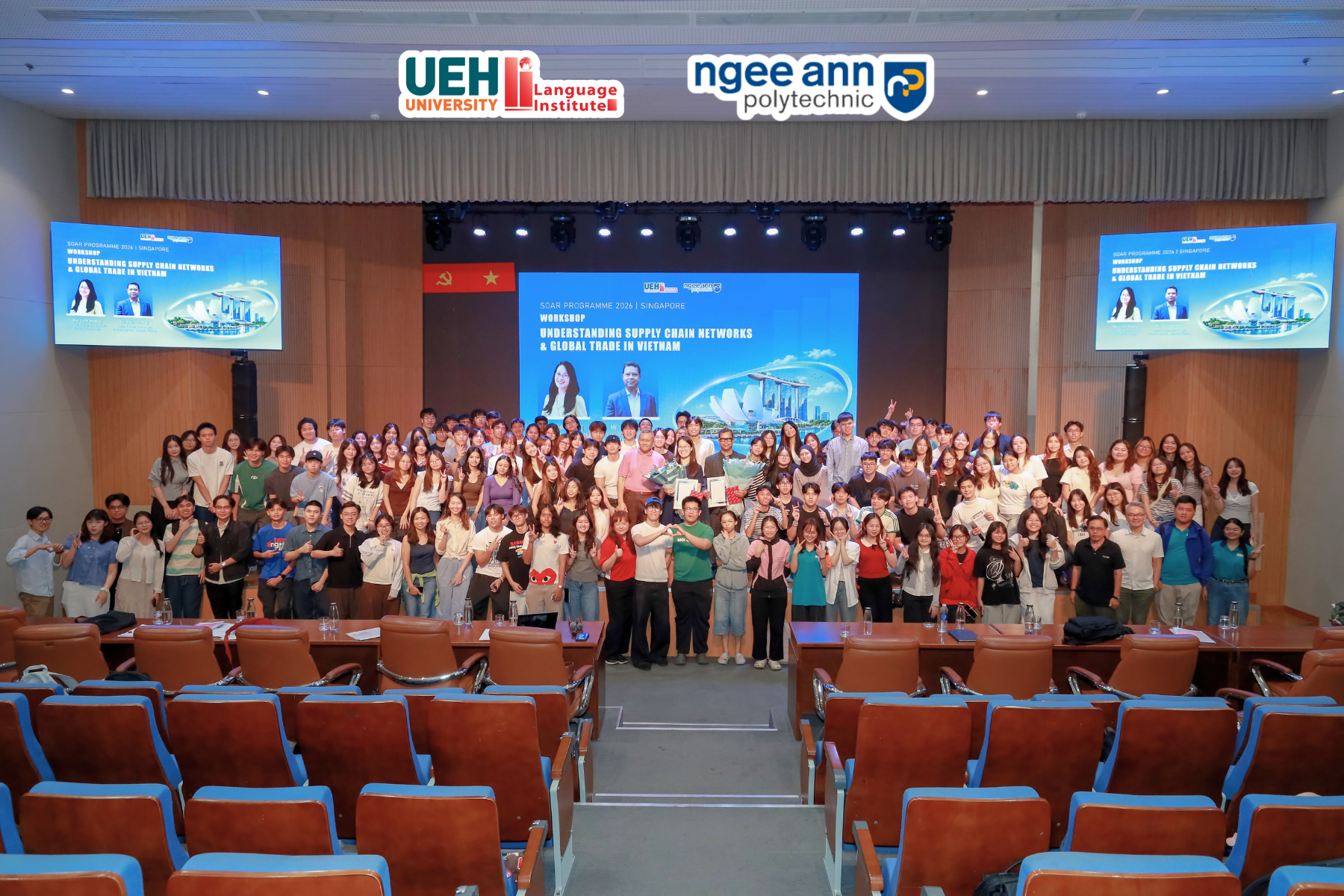
Following their arrival and familiarisation with the hotel surroundings, the delegation began the academic programme at UEH with an orientation session and the workshop “Vietnam Economy and International Markets,” delivered by Dr. Ho Quoc Thong, a lecturer at the UEH School of Economics. The session introduced Vietnam’s economic landscape, key growth drivers, foreign direct investment, and international trade, helping students understand the country’s position within regional and global economic networks.
Building on this foundation, discussions explored emerging sectors and the opportunities and challenges facing ASEAN businesses, including those from Singapore. The issues raised during the workshop also provided a framework for students to observe, ask questions, and make connections throughout the subsequent industry visits.
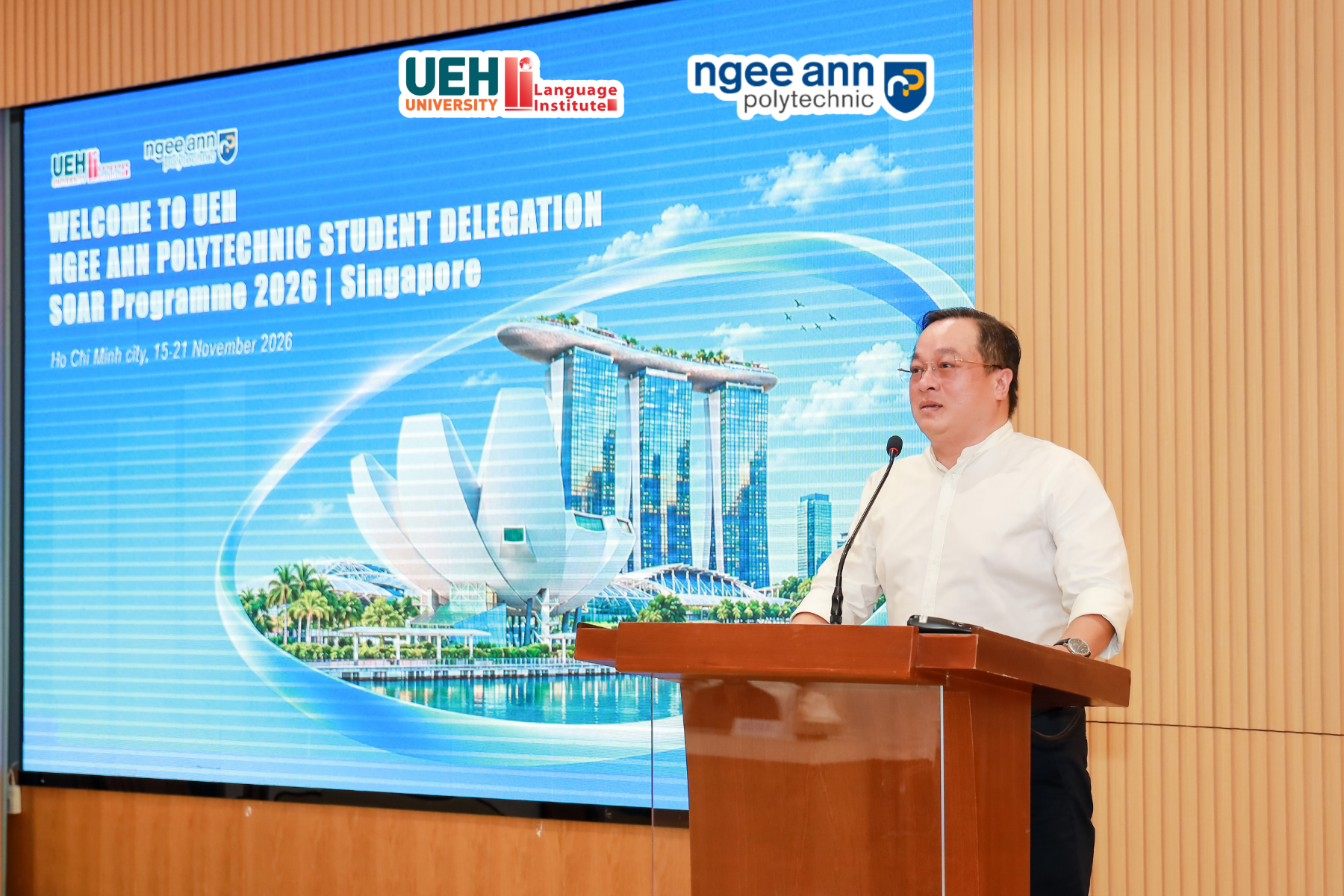
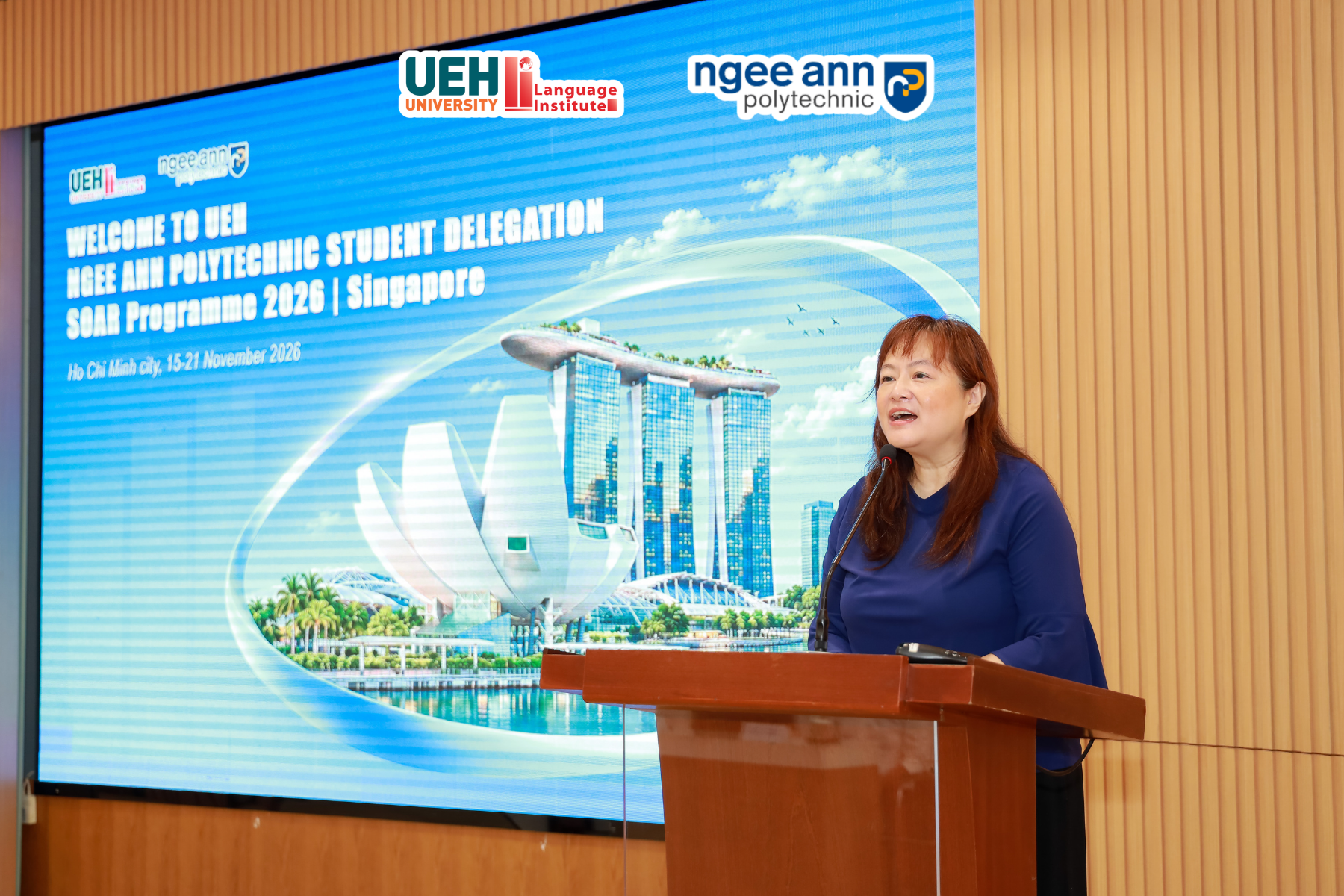
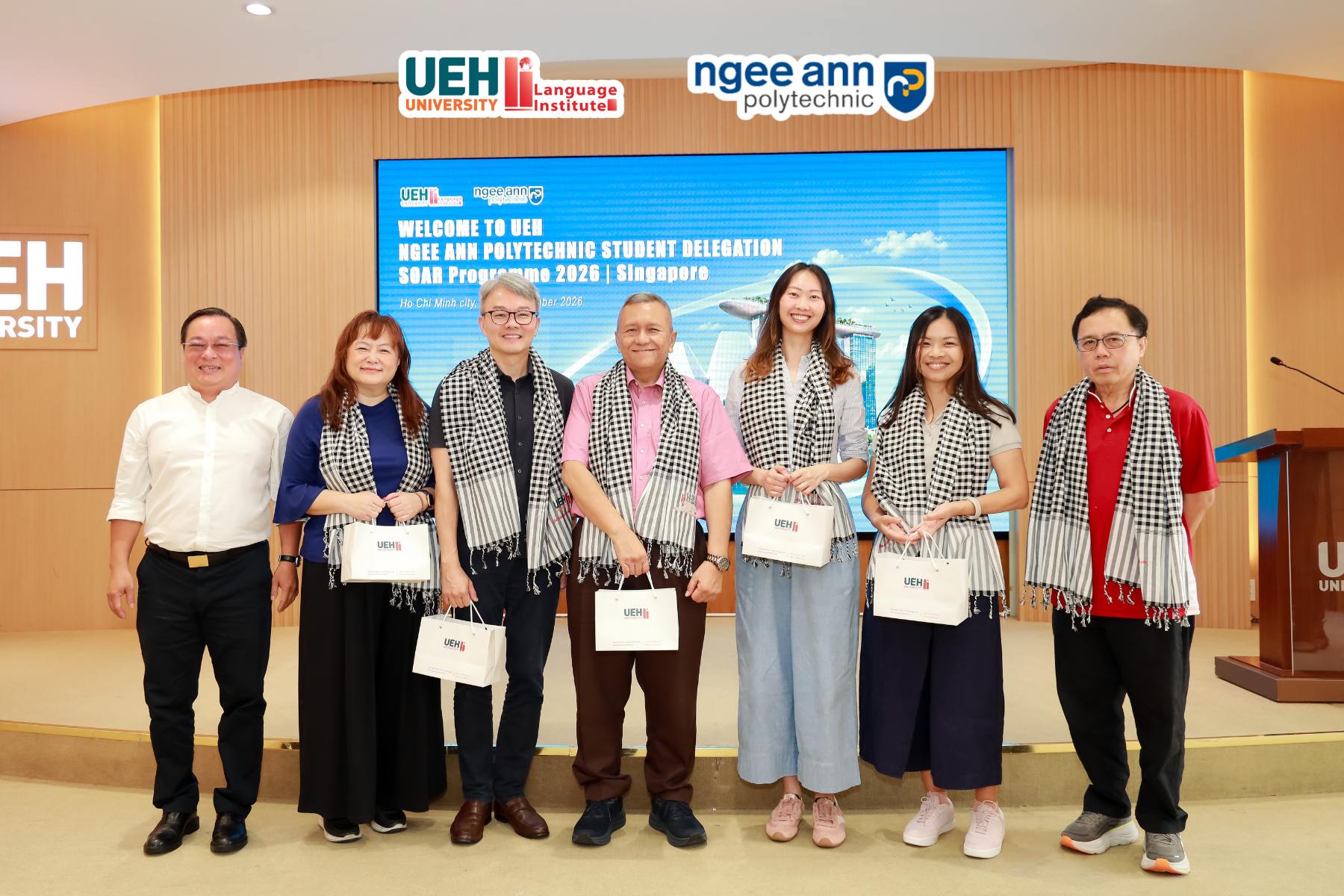
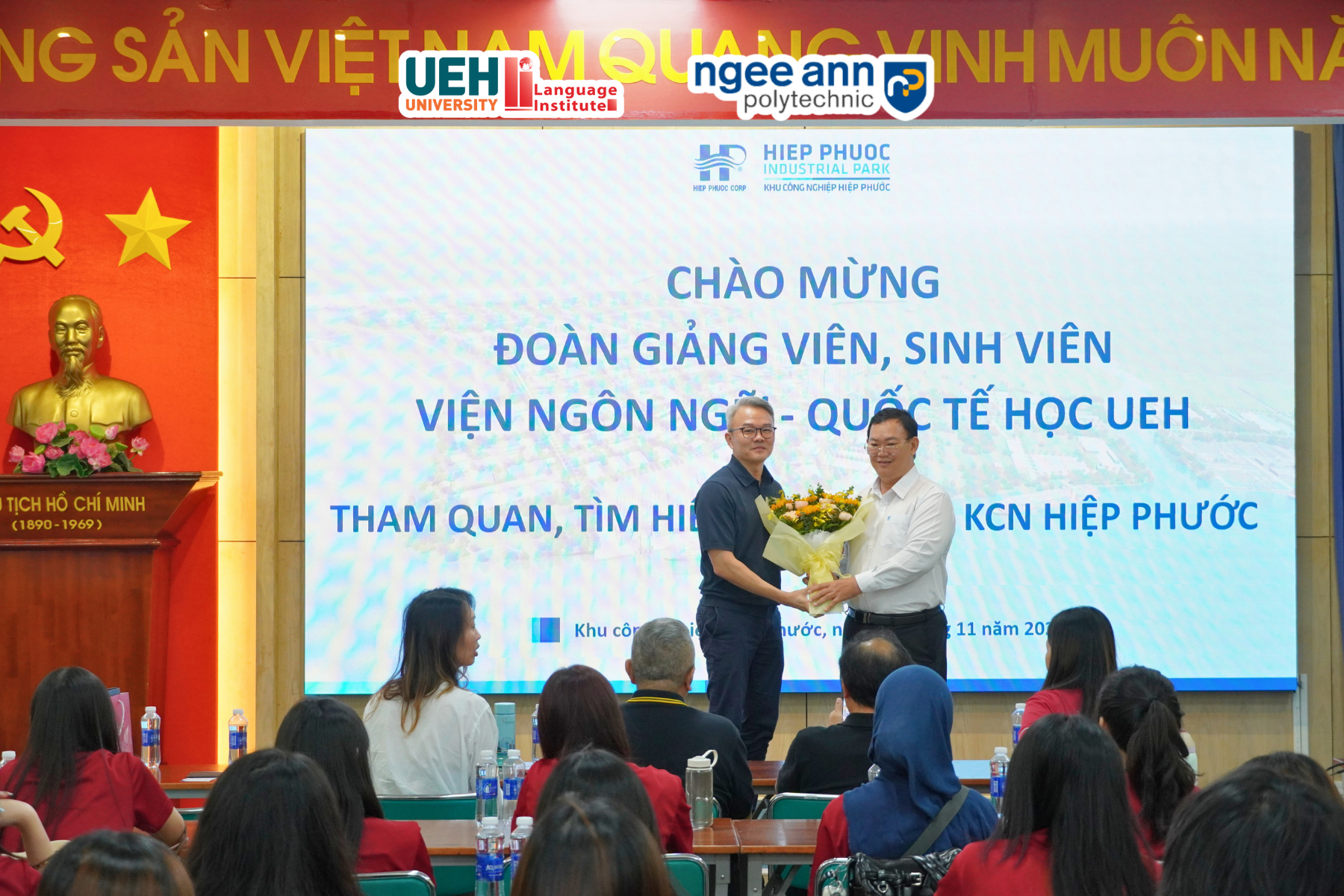
Representatives from UEH and Ngee Ann Polytechnic deliver remarks and exchange commemorative gifts at the SOAR Programme 2026 welcome session
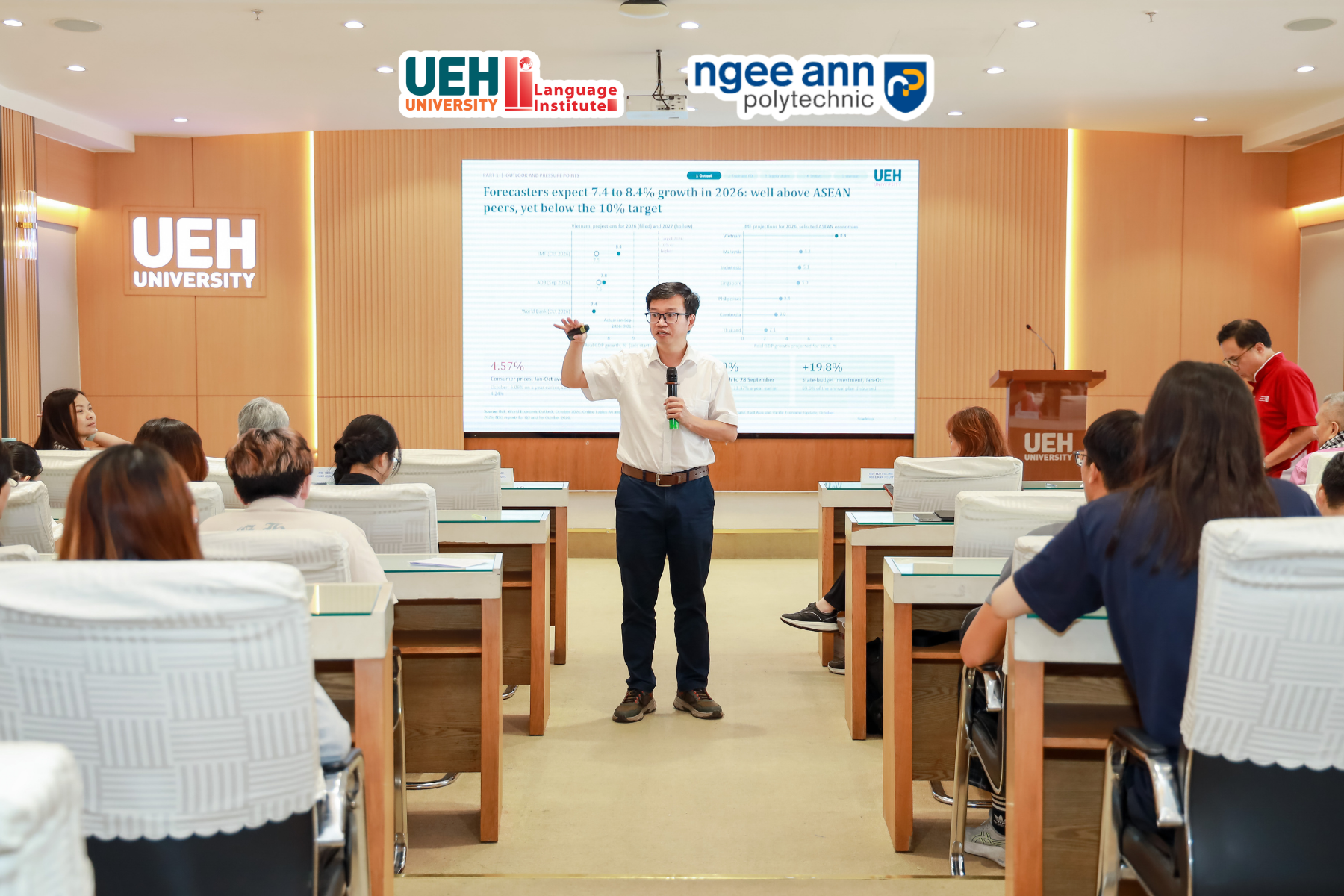
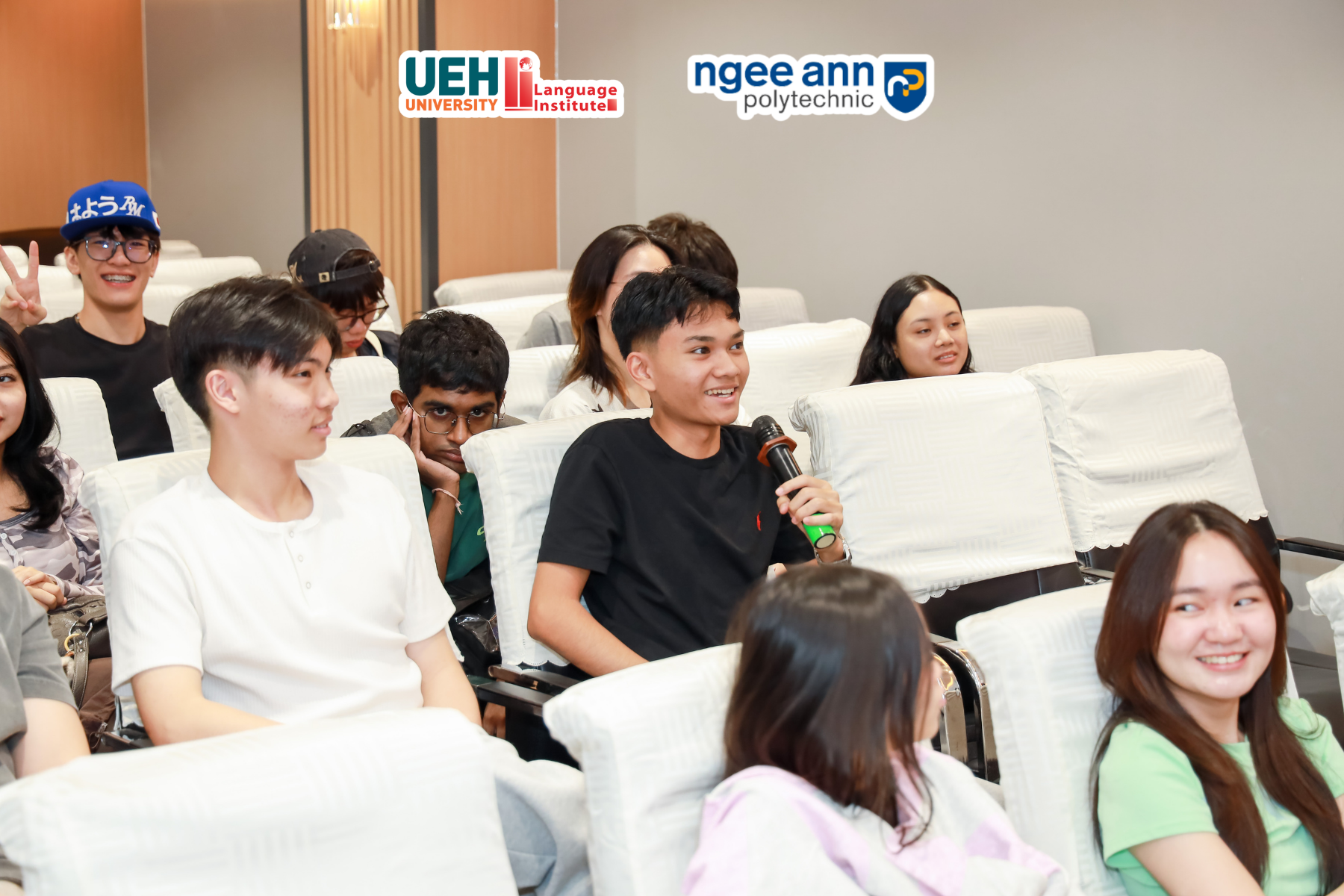
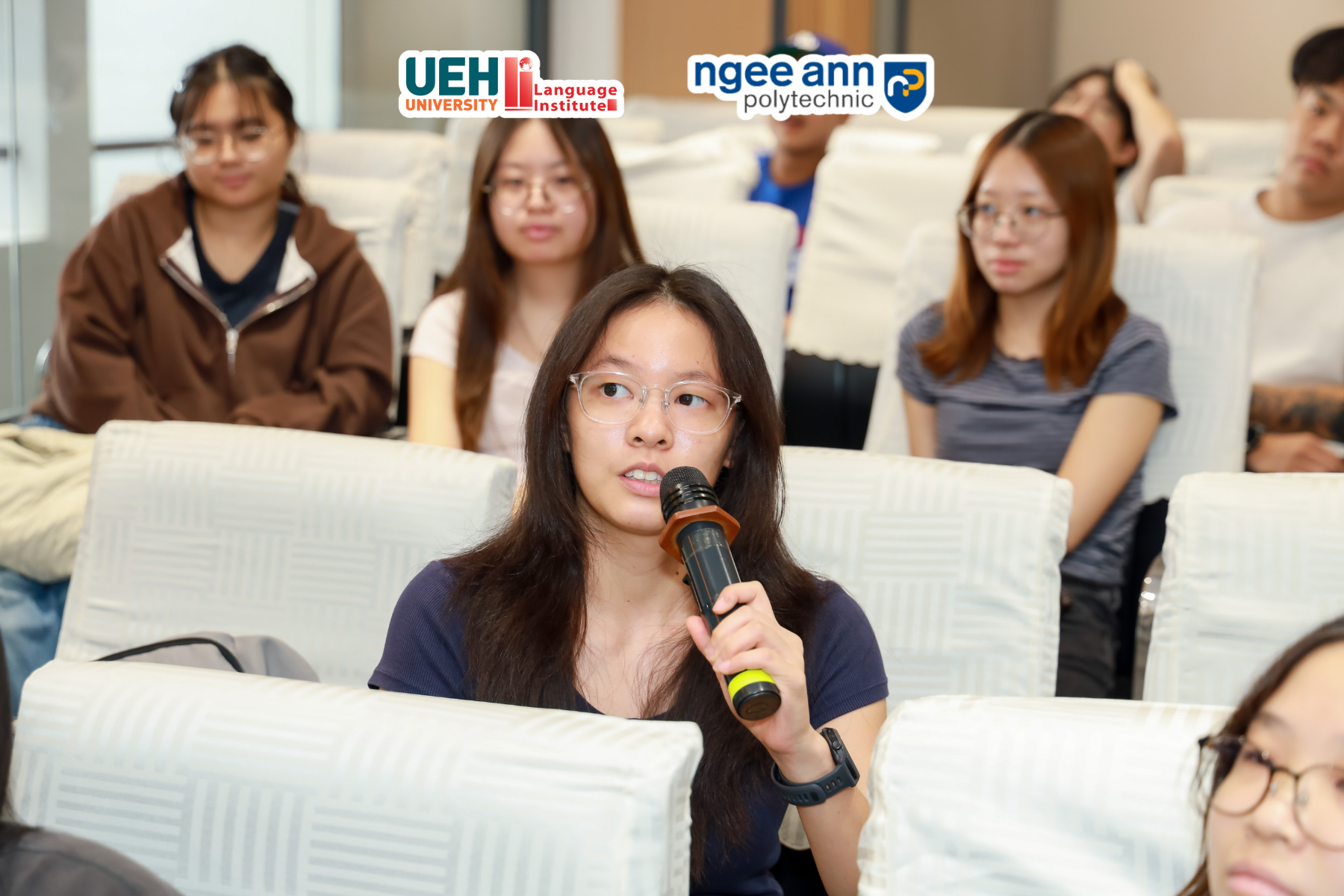
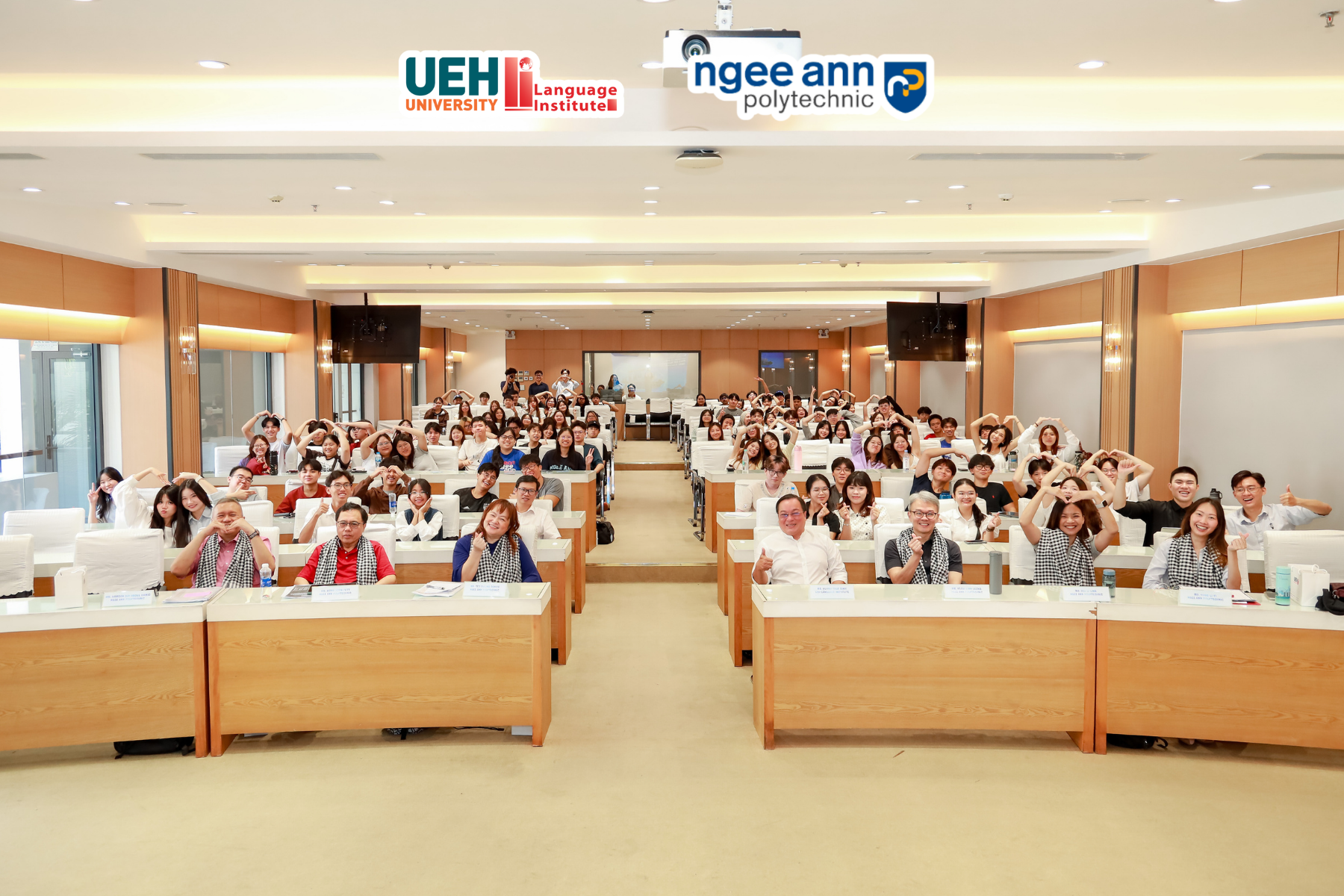
The Ngee Ann Polytechnic delegation attends the orientation session and workshop on Vietnam’s economy at UEH
Connecting Trade Knowledge with Supply Chain Networks
Extending the broader economic discussion, the workshop “Understanding Supply Chain Networks & Global Trade in Vietnam” featured Mr. Anirban Roy, Senior Partner at InnoLab Asia, and Ms. Linh Hoang, Associate Partner at InnoLab Asia and CEO of Lead The Change. The session examined supply chain structures, market connectivity, and Vietnam’s role in global value chains.
Through interactive discussions, questions, and practical case studies, students explored import and export activities, foreign investment, free trade agreements, and shifting investment trends. Combining strategic insights with business experience, the workshop helped participants understand how companies assess market opportunities and organise their operations in an increasingly interconnected economy.
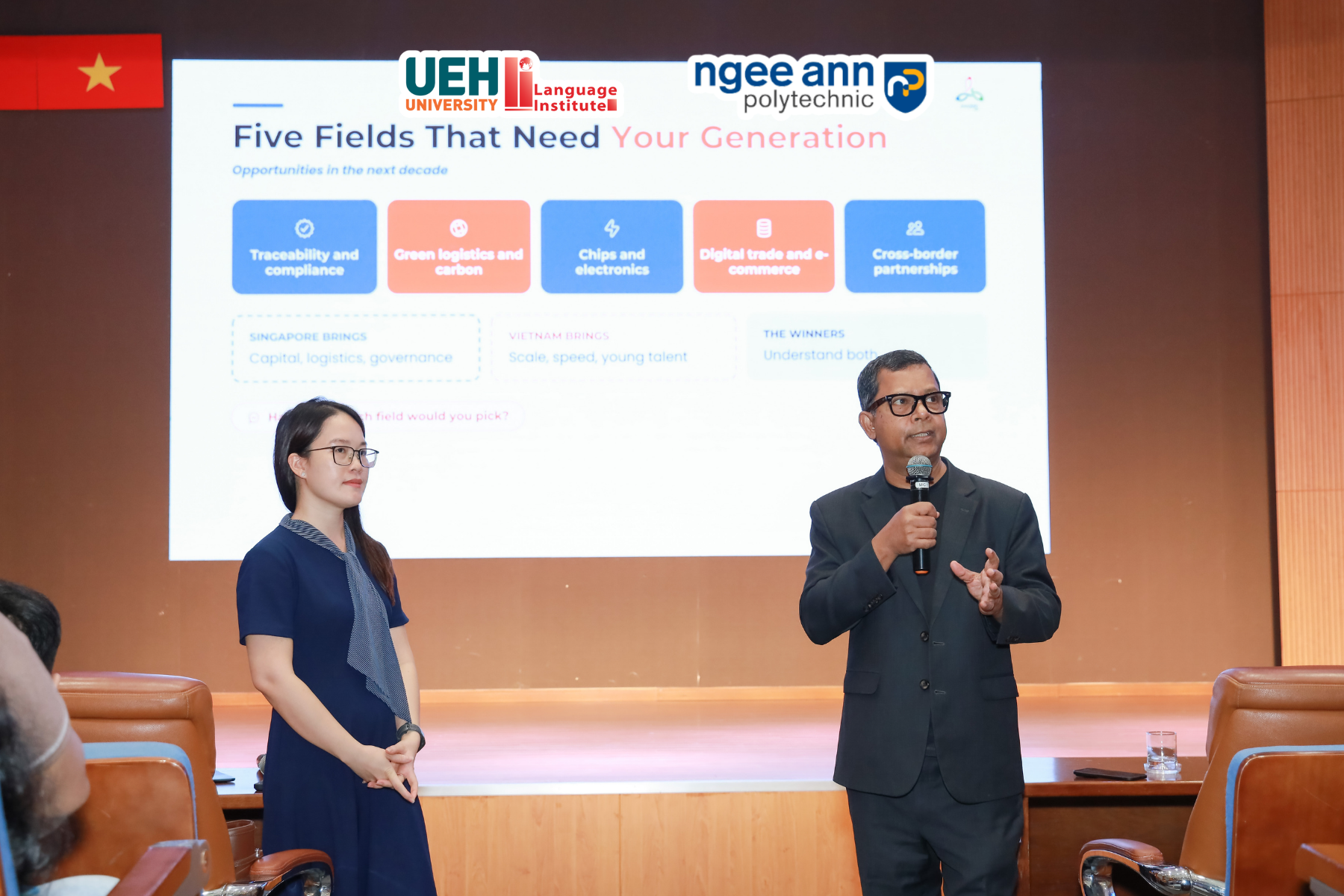
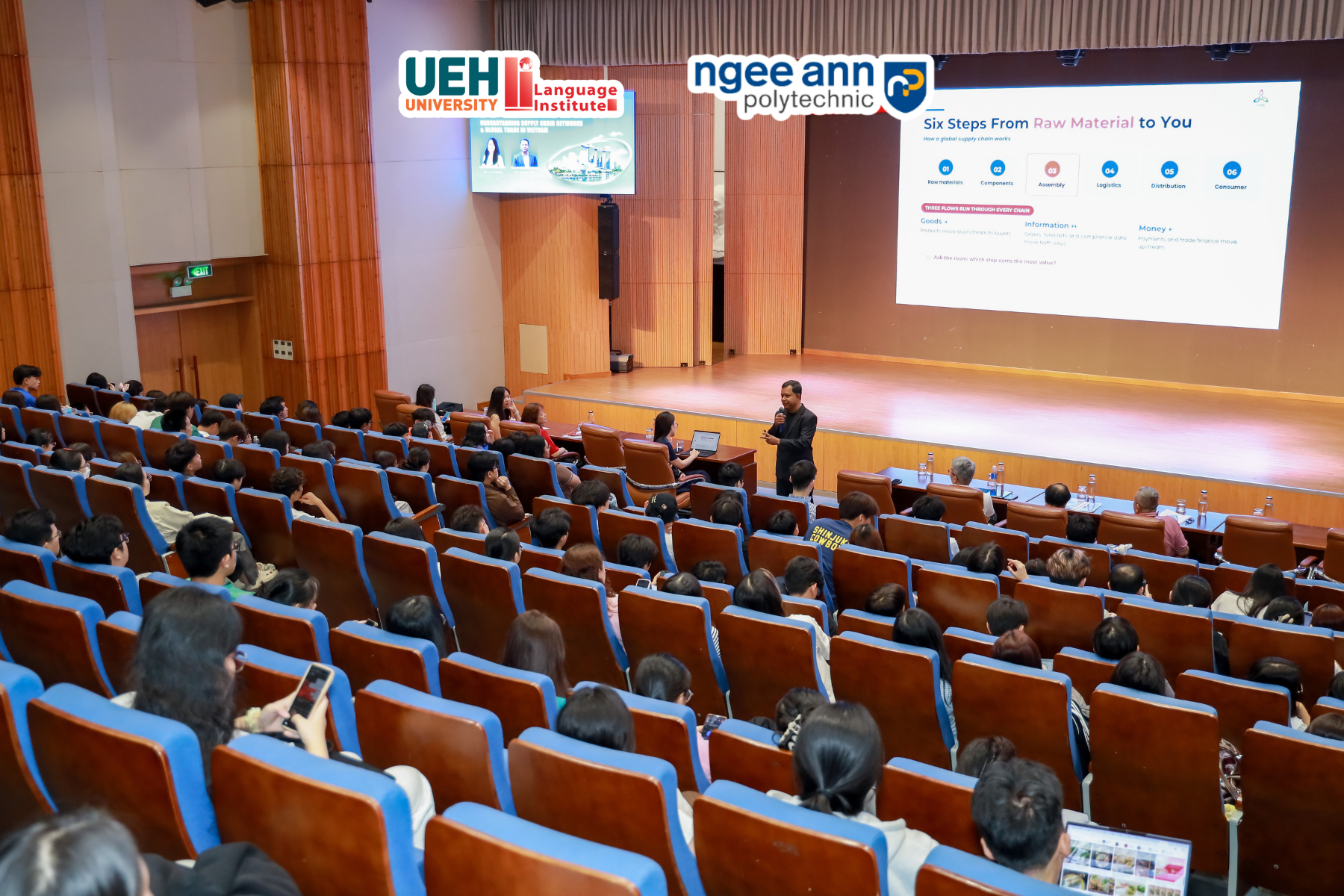
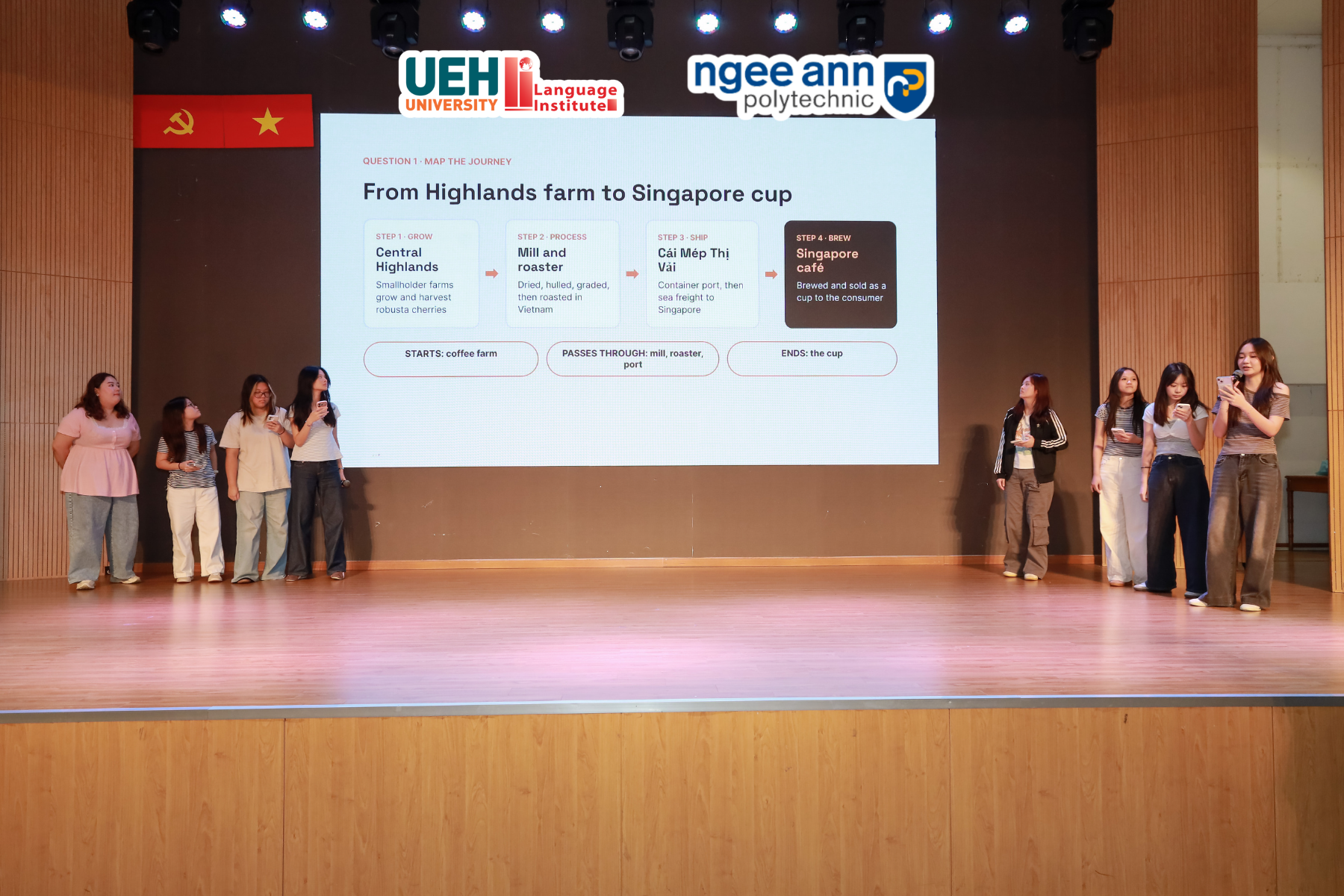
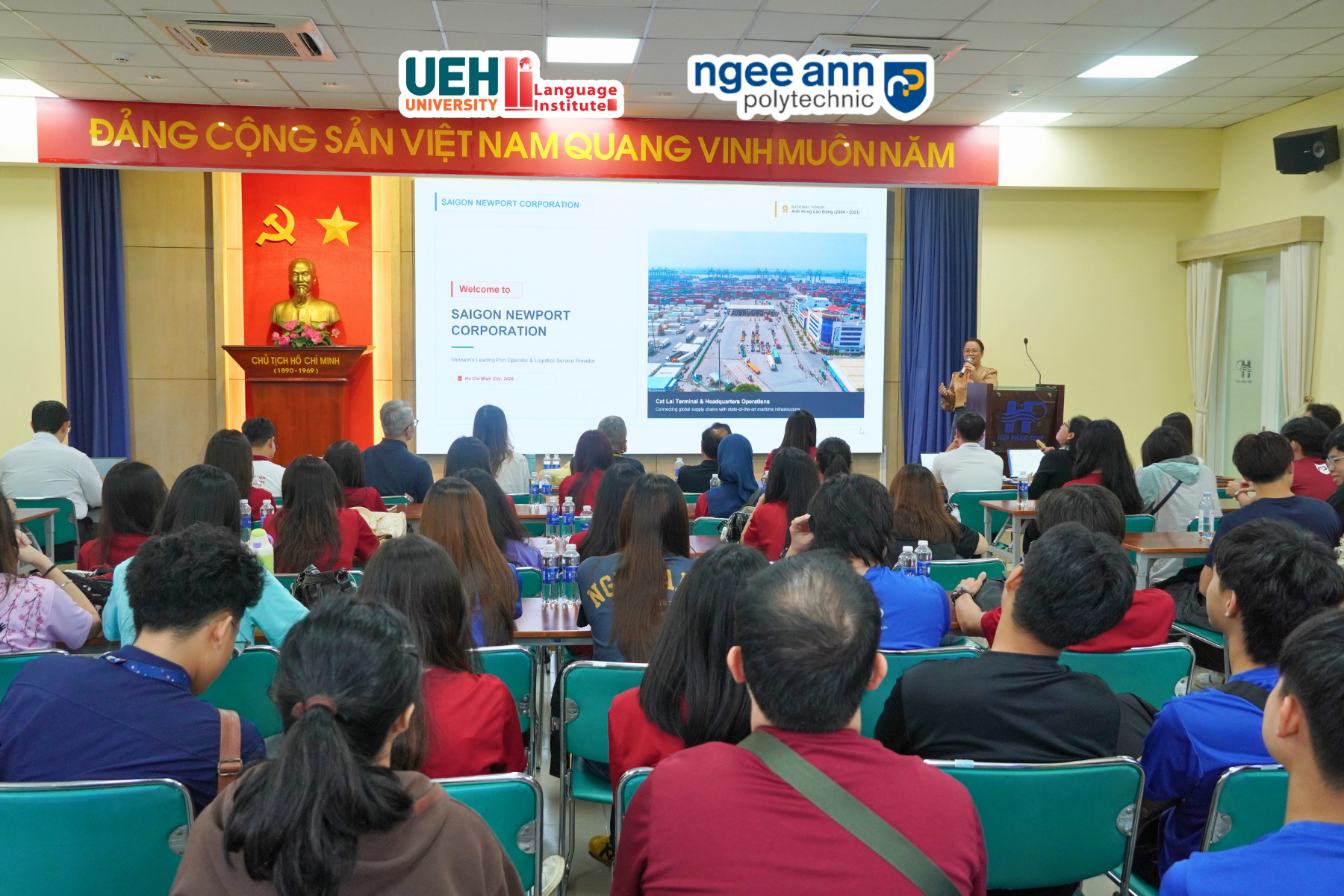
Students participate in the workshop “Understanding Supply Chain Networks & Global Trade in Vietnam"
These discussions continued in the workshop “Digital Trade and eCommerce Logistics,” delivered by Mr. Trinh Huynh Quang Canh, a master’s-qualified lecturer in the Department of Logistics and Supply Chain Management at UEH’s School of International Business and Marketing. Focusing on digital trade and e-commerce logistics, the session connected digital transformation with order fulfilment, warehouse operations, and last-mile delivery, highlighting the role of logistics in bringing goods to consumers.
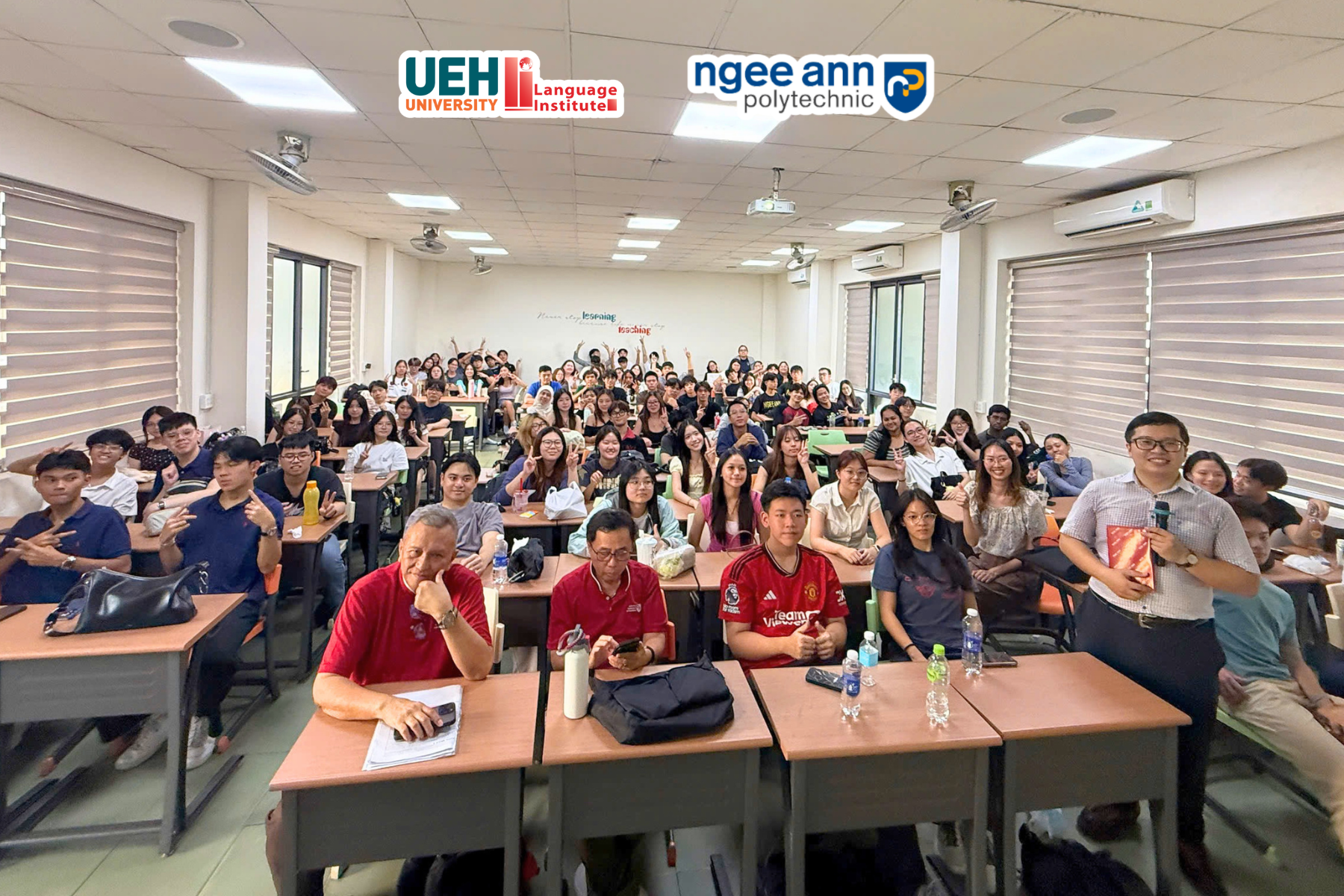
Students attend the workshop on international trade and e-commerce logistics
Exploring Manufacturing Practices and Business Innovation
Alongside the workshops, the programme brought students to Schindler Vietnam, CT Group, C.P. Vietnam, and ZIEHL-ABEGG Vietnam to explore manufacturing, technology, and business operations across different sectors. These visits provided concrete examples that complemented the academic sessions, allowing students to observe how companies organise resources, manage quality, and connect their operations in Vietnam with domestic and international markets.
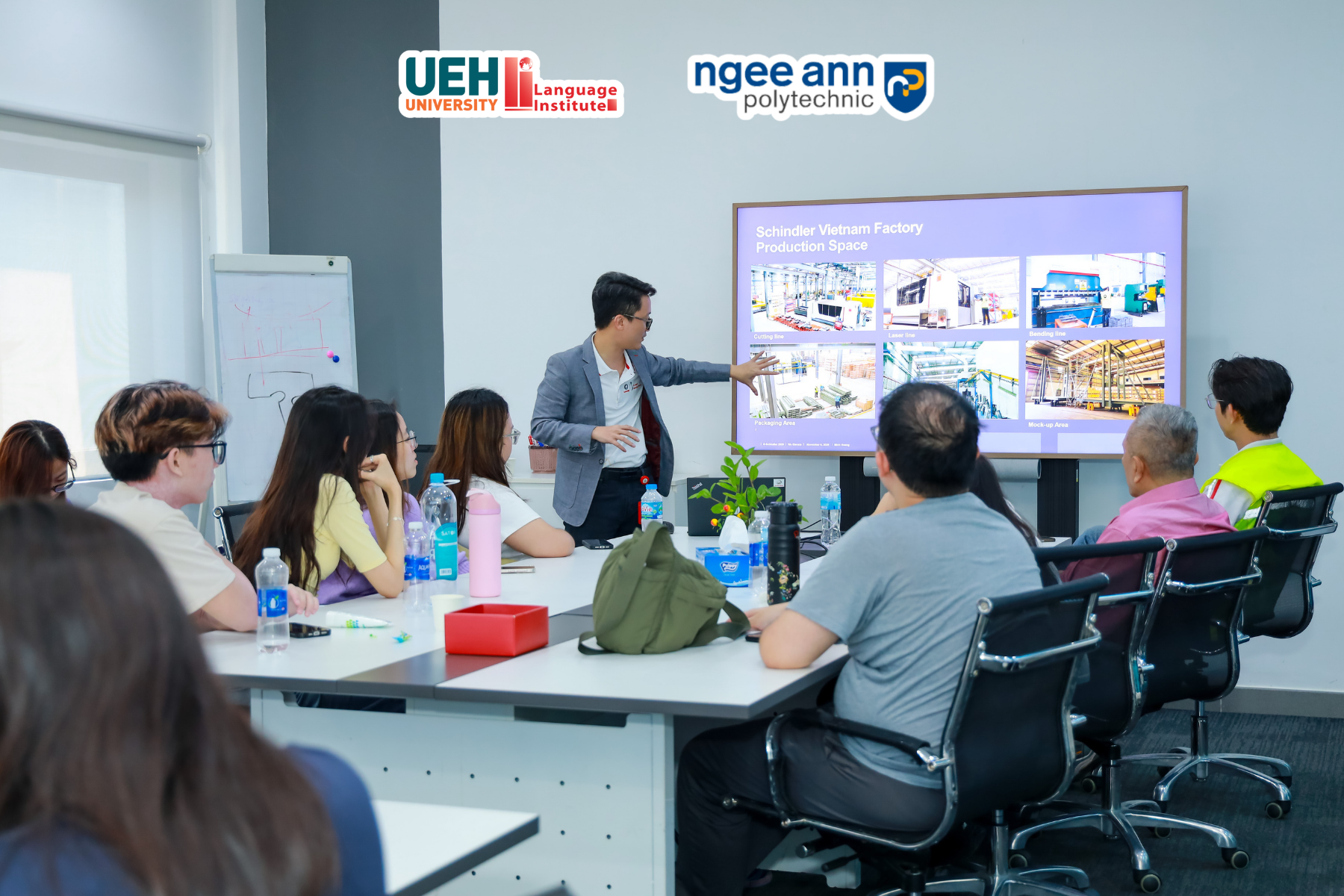
At Schindler Vietnam, the delegation learned about elevator component manufacturing, machining processes, and quality control, exploring the relationships between engineering, factory operations, and supply chain management. At CT Group, the company presentation and product showcase offered perspectives on unmanned aerial vehicle (UAV) technology, its practical applications, and the process of bringing innovative products to market.
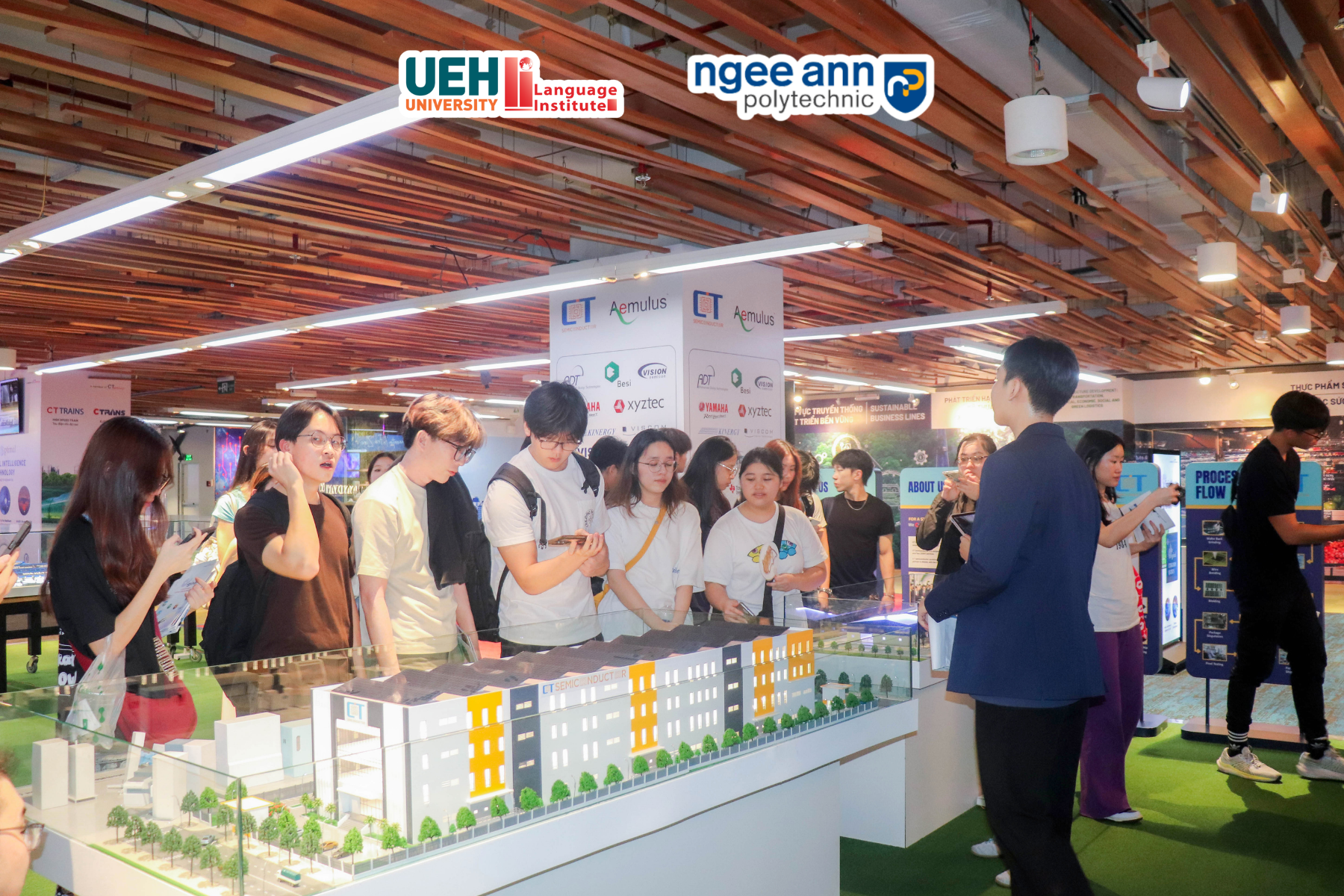
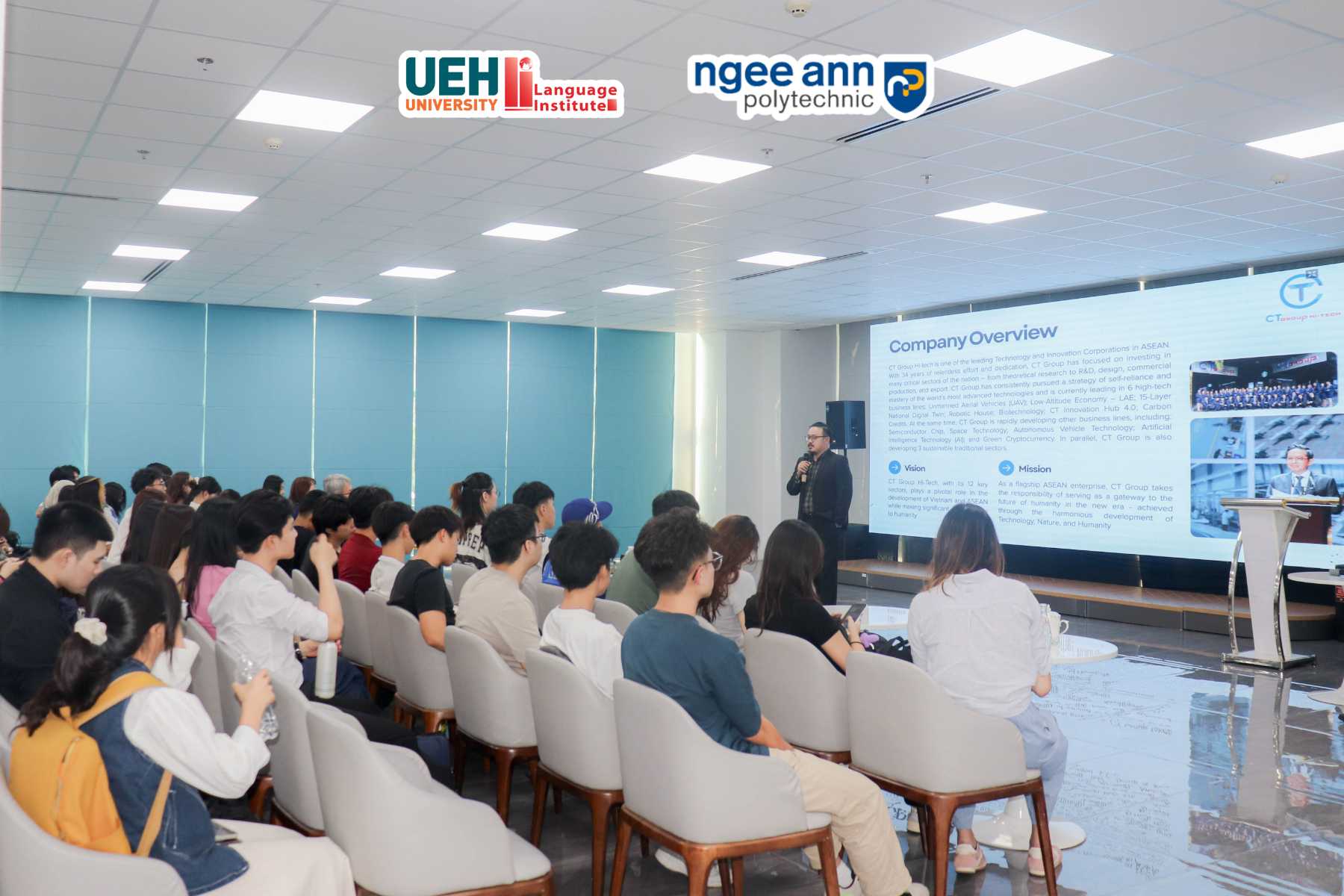
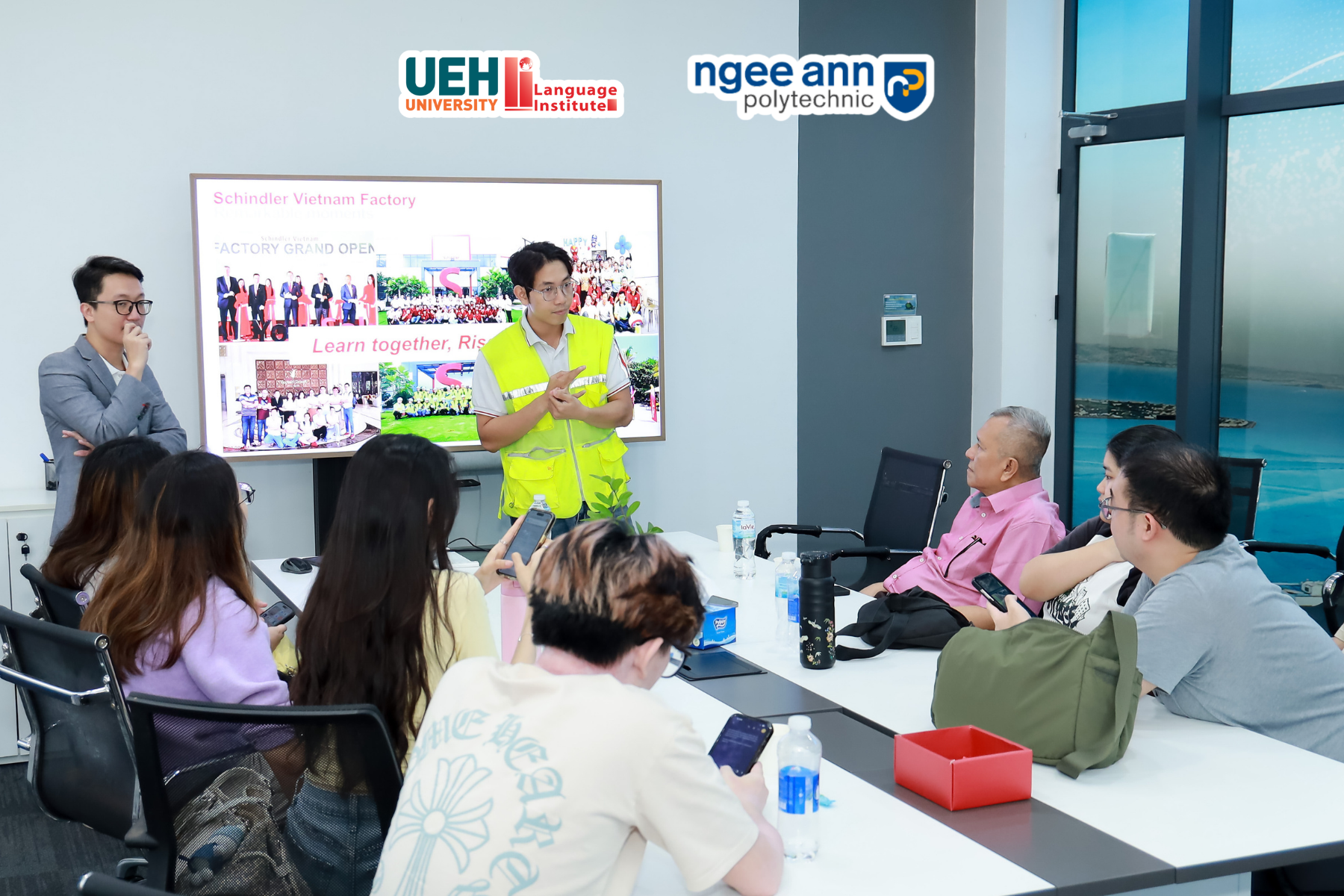
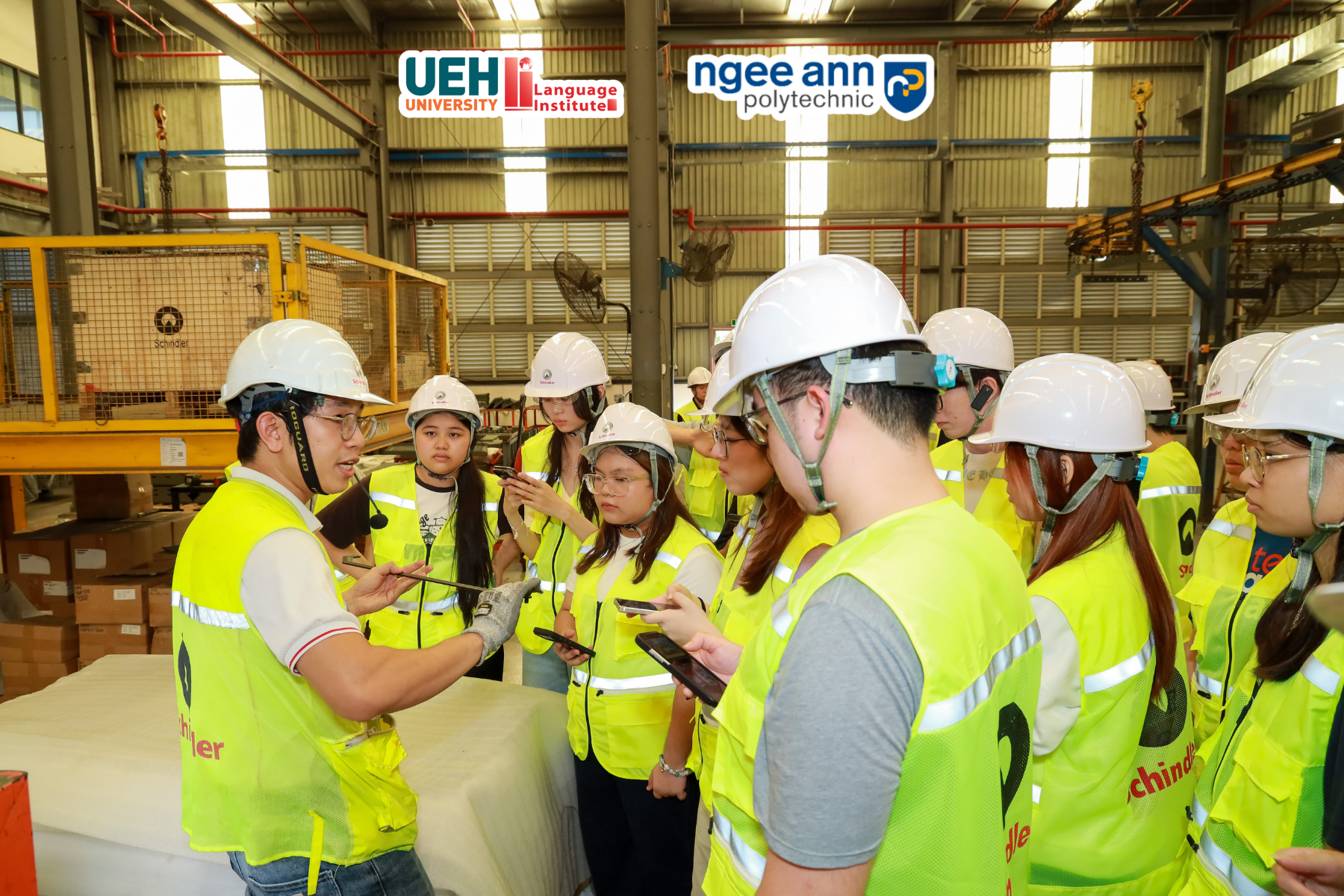
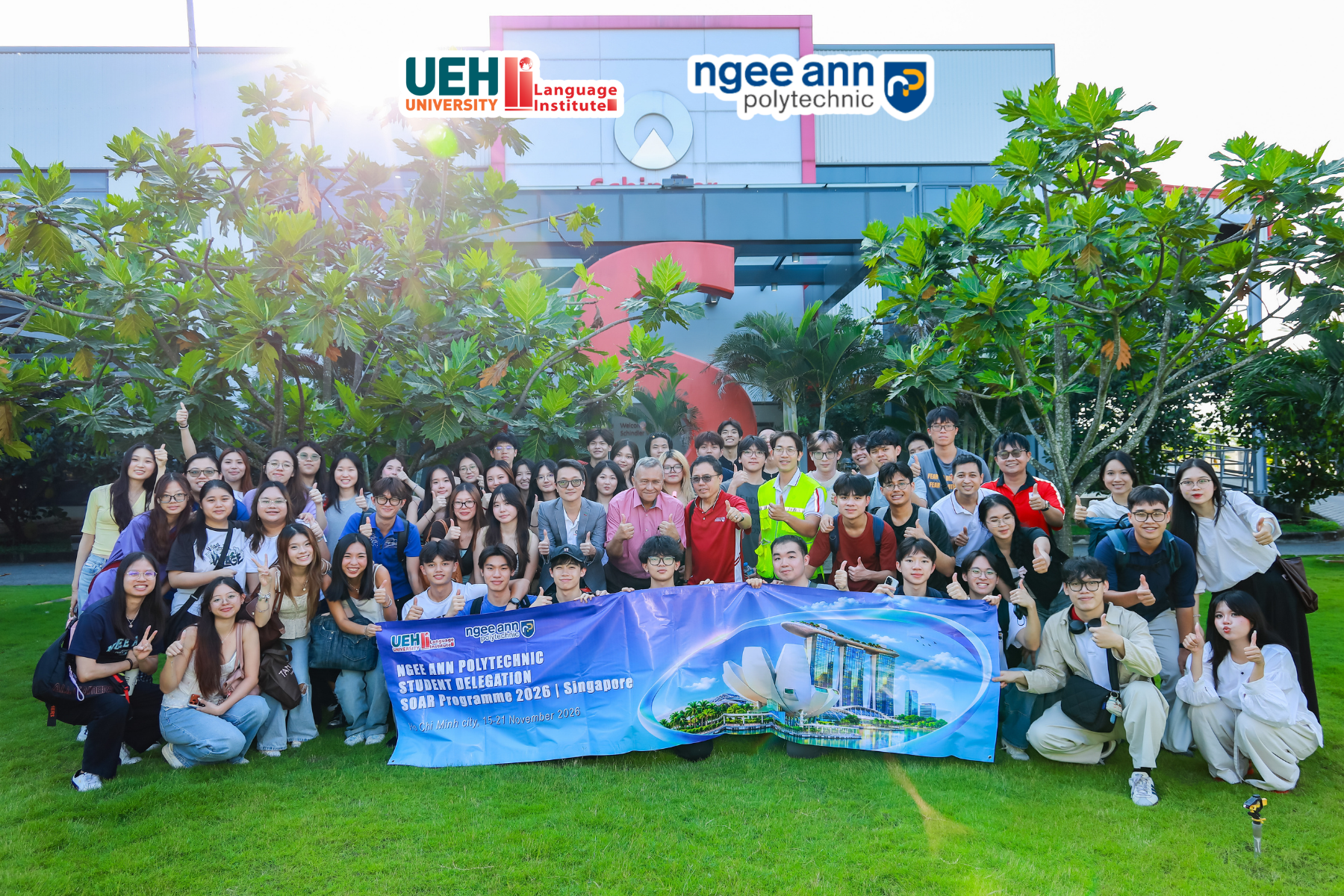
The Ngee Ann Polytechnic delegation explores technology and business operations at Schindler Vietnam and CT Group
Expanding the learning experience to the food industry, the visit to C.P.’s Cu Chi plant introduced students to raw material handling, food processing, packaging, and quality inspection. Discussions on manufacturing technology, automation, and food safety standards illustrated how different production stages are coordinated to ensure product quality and operational efficiency. An introduction to the integrated Feed – Farm – Food model, encompassing animal feed production, livestock farming, and food processing, further helped students understand the connections between raw material sourcing, production, and distribution within a single value chain.
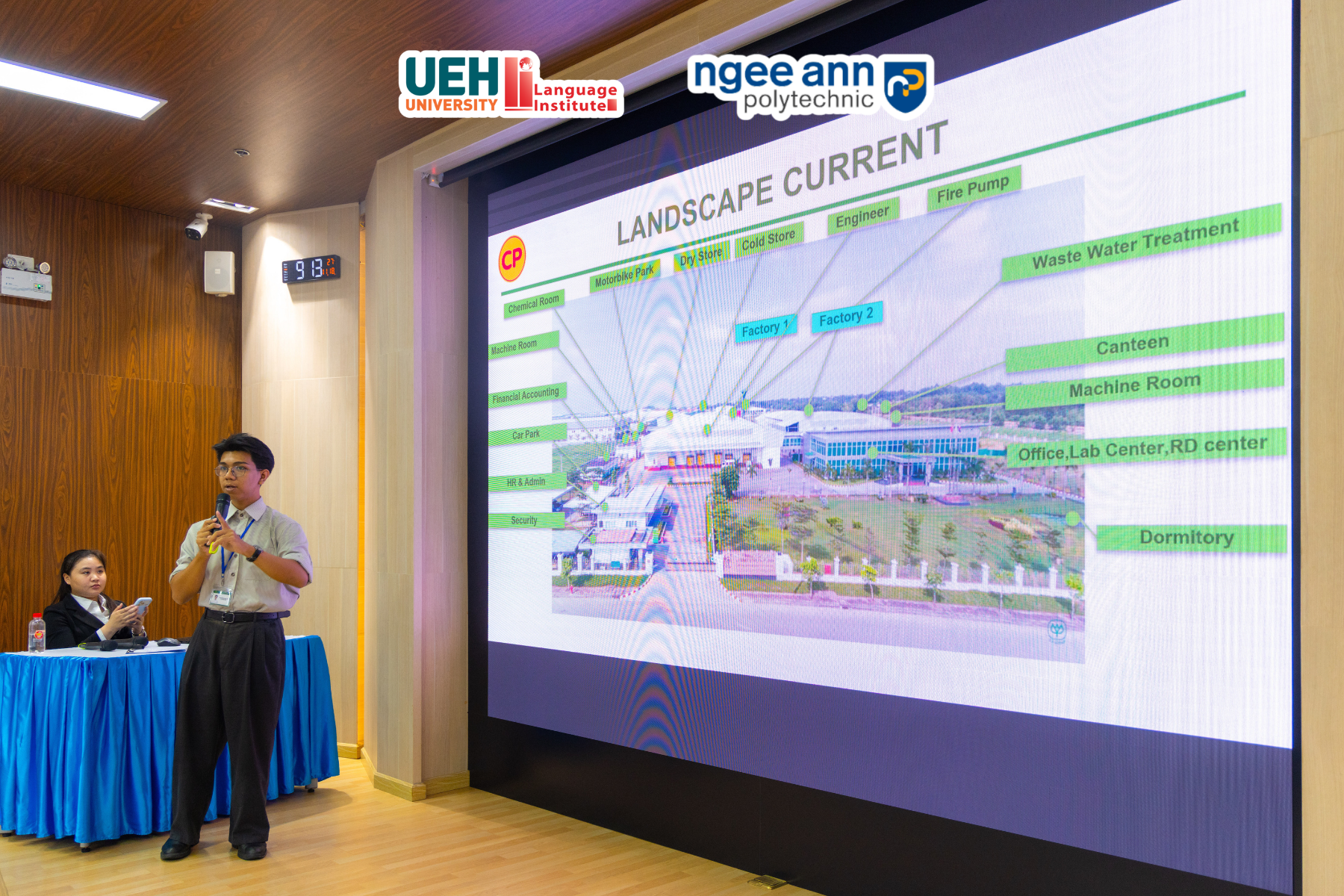
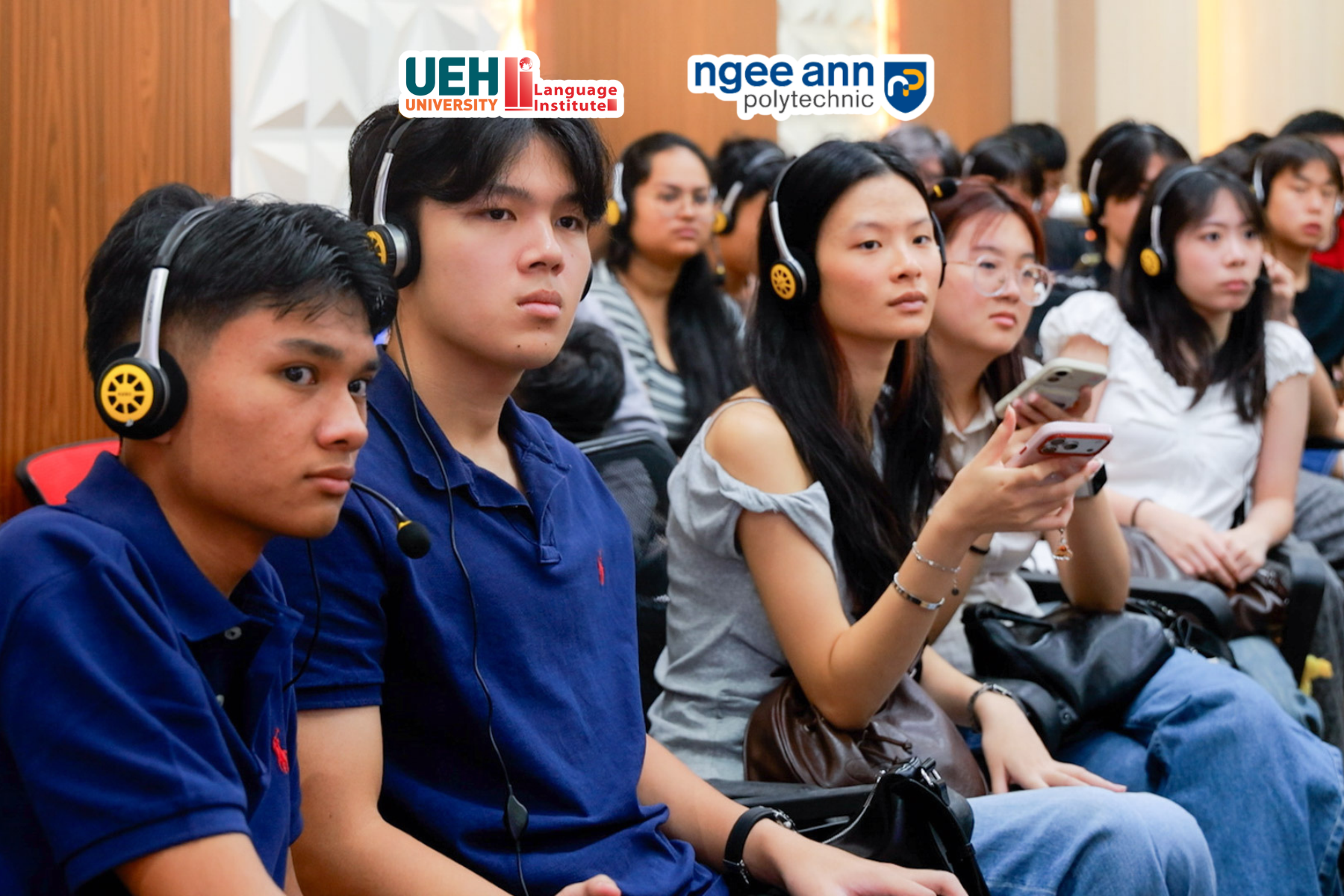
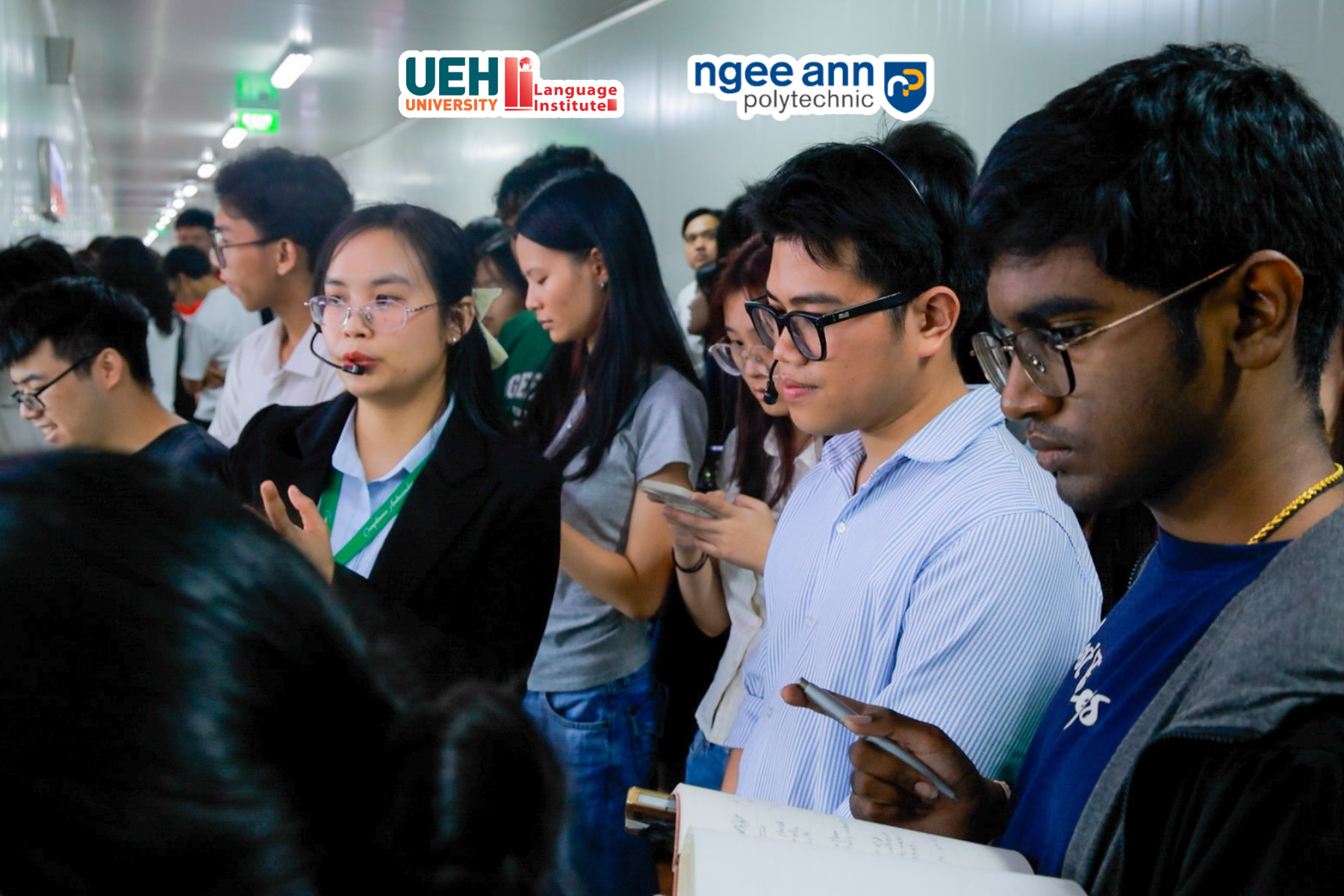
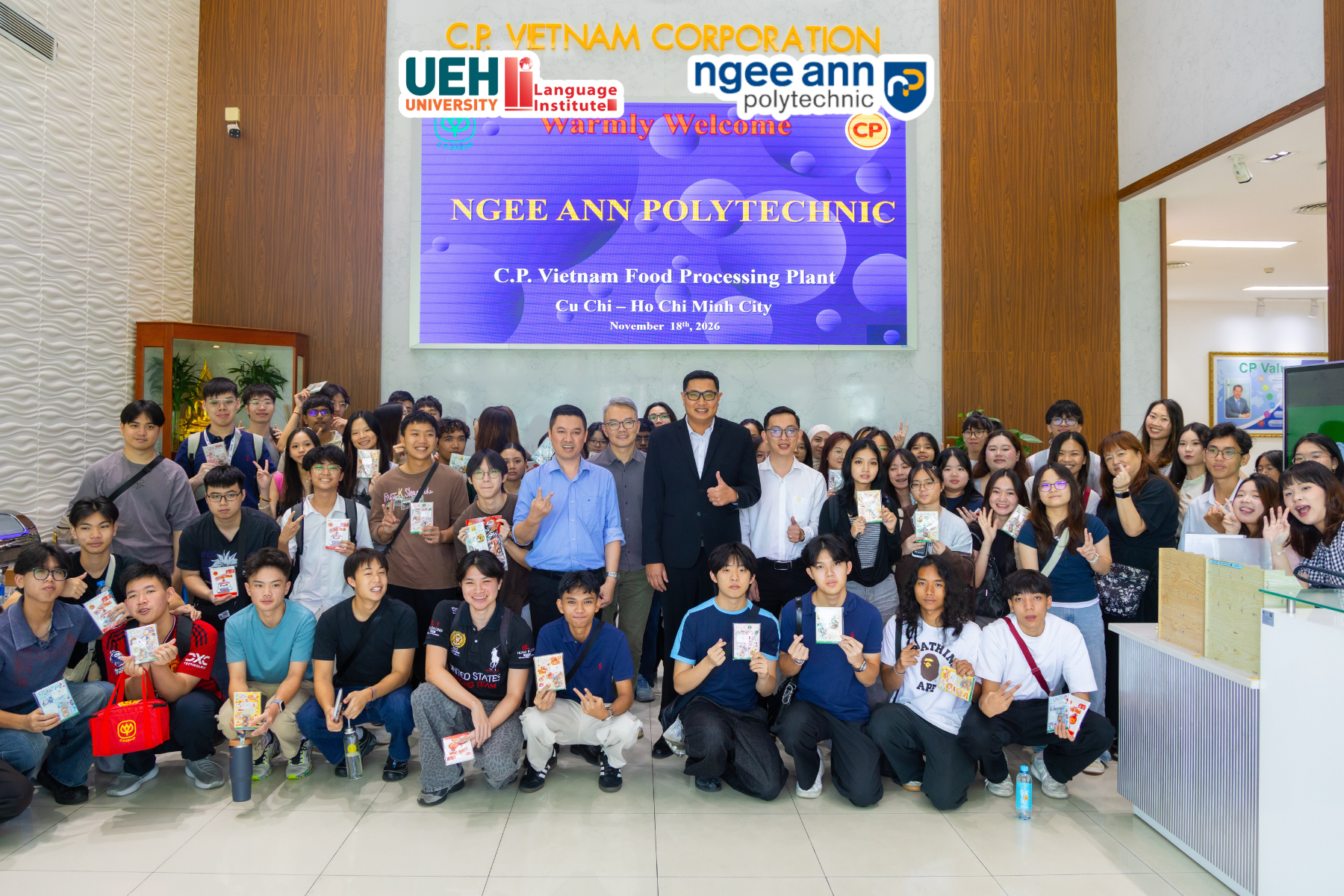
Students learn about food processing and the production model at C.P. Vietnam
Continuing the journey at ZIEHL-ABEGG Vietnam, students explored manufacturing in ventilation and drive technology, alongside assembly, automation, and quality management. Exposure to these different manufacturing settings enabled participants to compare how companies apply technology, meet product requirements, and coordinate activities across regional and global supply networks.
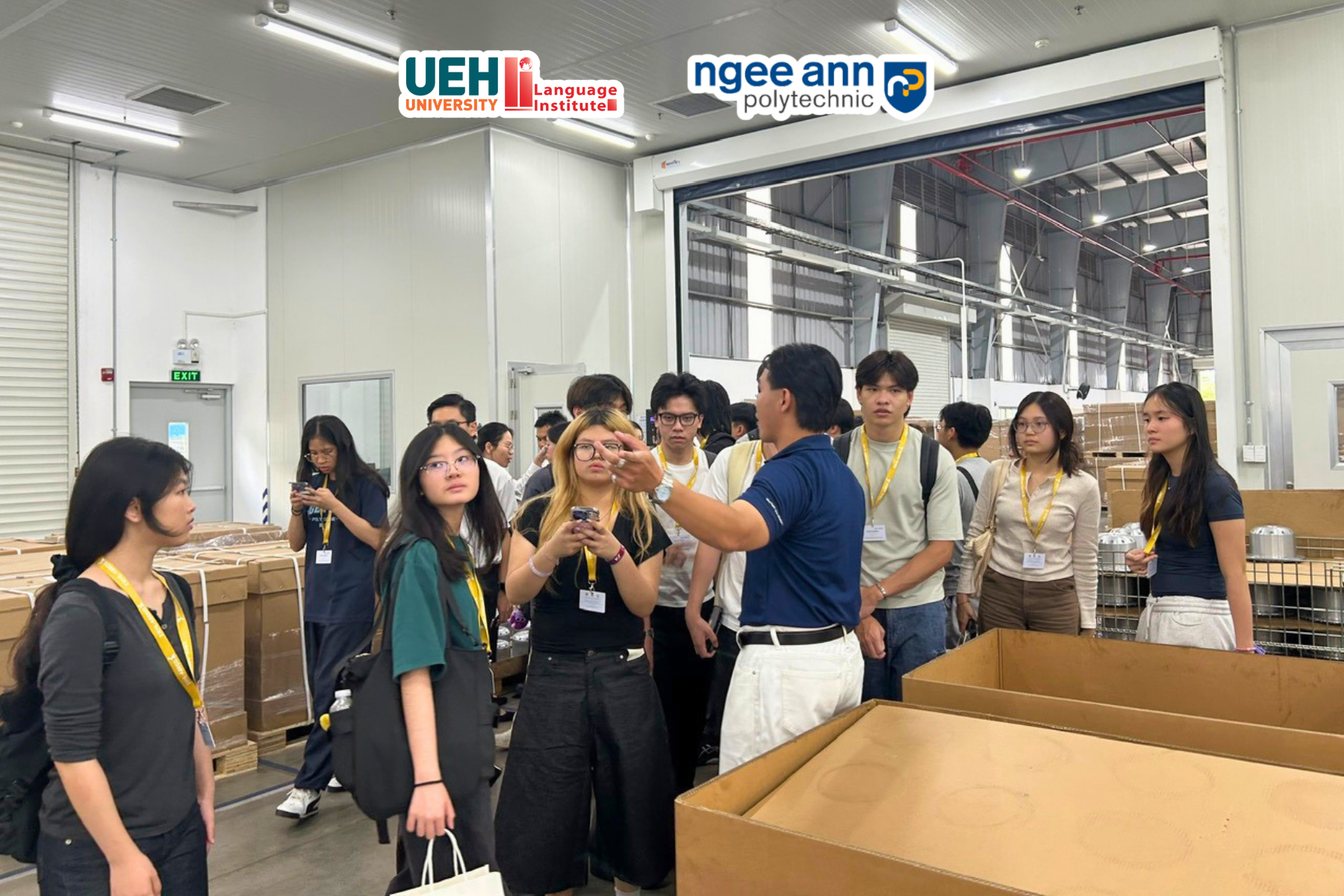
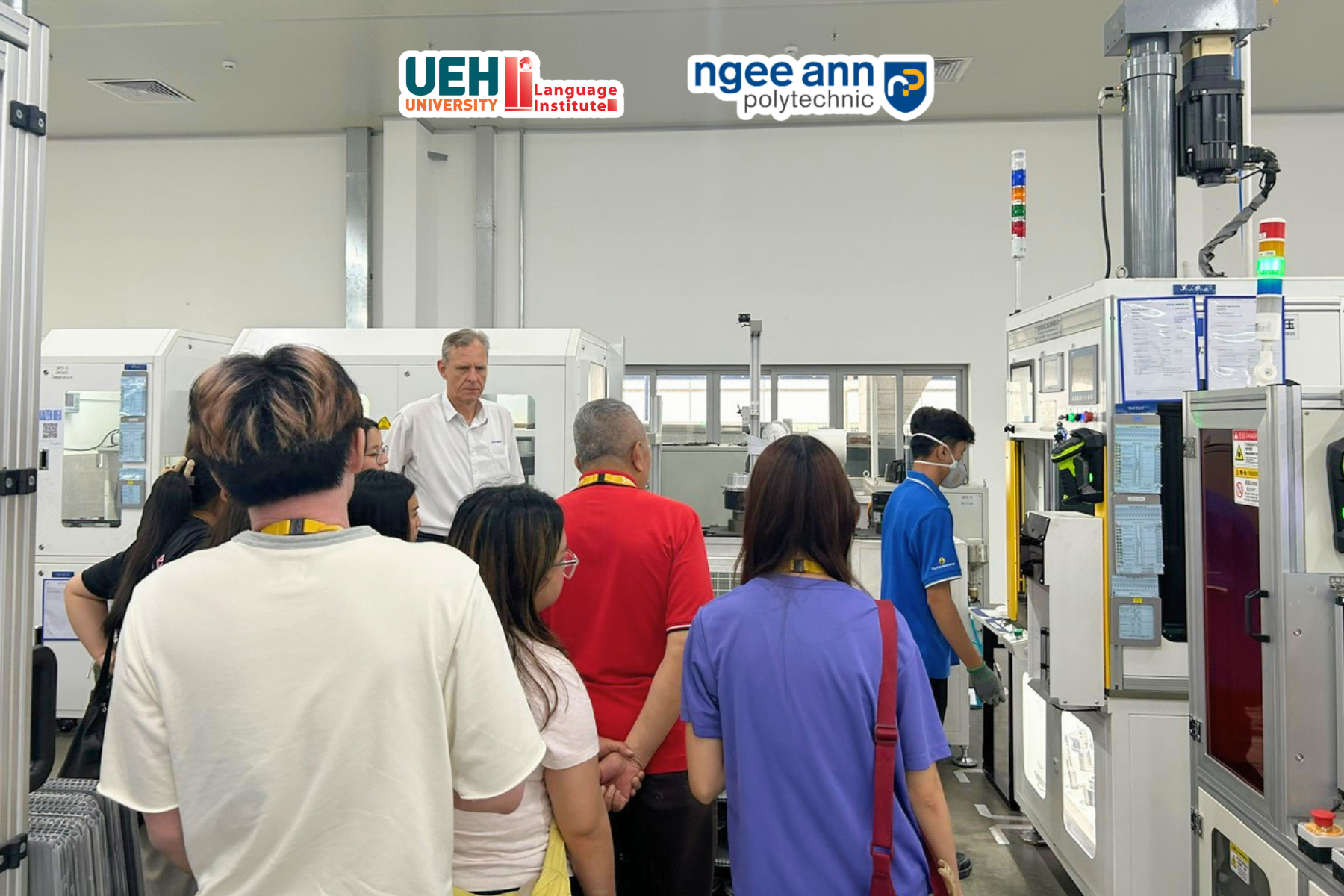
The delegation visits ZIEHL-ABEGG Vietnam to learn about its manufacturing operations
Following the Flow of Goods from Warehouses to Seaports
While the factory visits introduced students to how products are made, the visits to YCH Protrade and Tan Cang Hiep Phuoc Port illustrated how goods are stored, distributed, and connected with markets. Together, these destinations helped students understand the links between production and distribution, as well as the role of different operators within the supply chain.
At YCH Protrade, the delegation explored warehouse operations and the processes of receiving, storage, inventory management, order fulfilment, and goods distribution. Discussions on warehouse management technologies and coordination across operational stages connected these observations with logistics efficiency and the role of third-party logistics providers.
Building on the warehouse experience, the visit to Tan Cang Hiep Phuoc Port introduced students to container terminal operations and maritime logistics. Learning about container handling, yard management, and the coordination of import and export shipments provided further insight into how seaports connect Vietnam’s manufacturing activities with international supply chains.
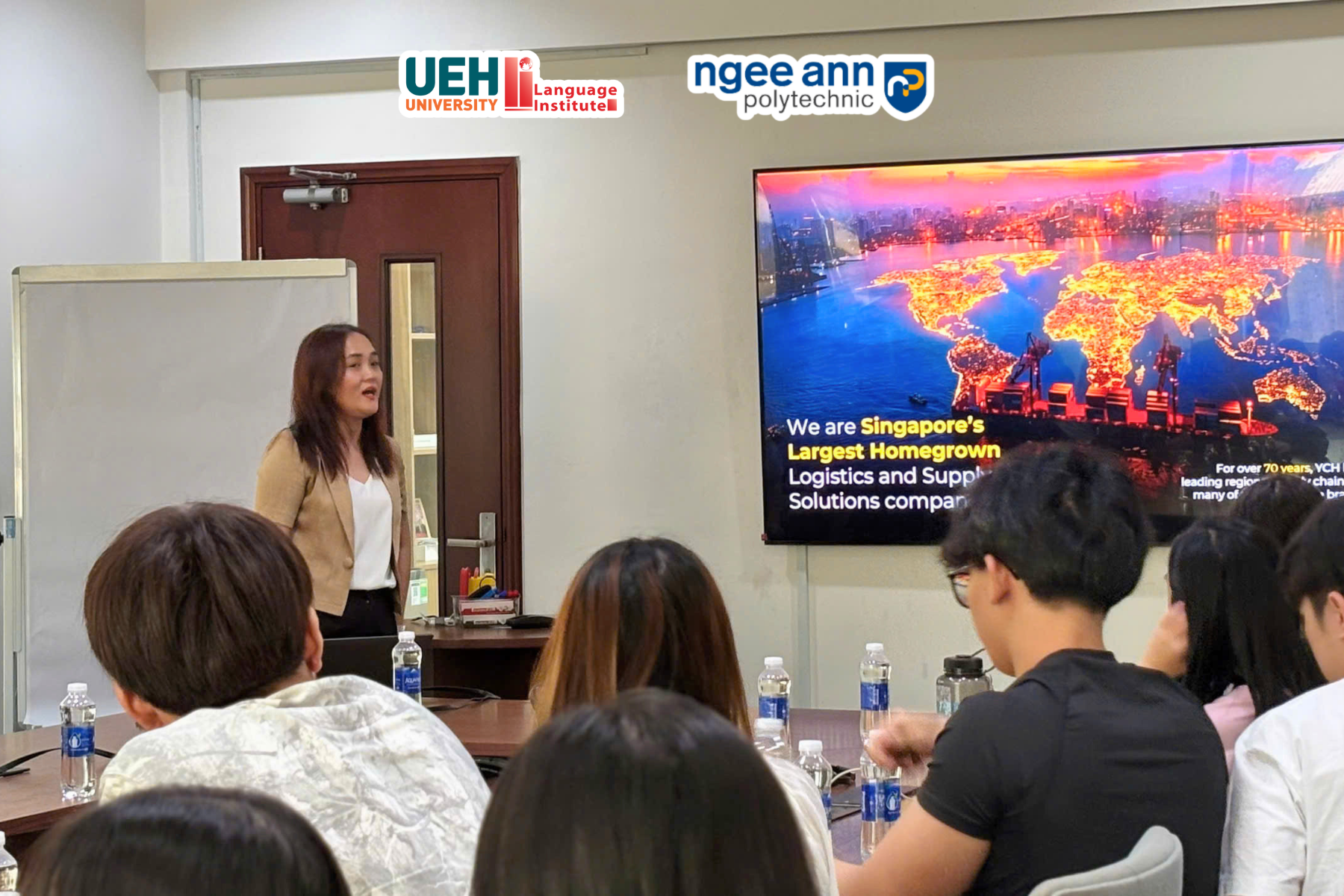
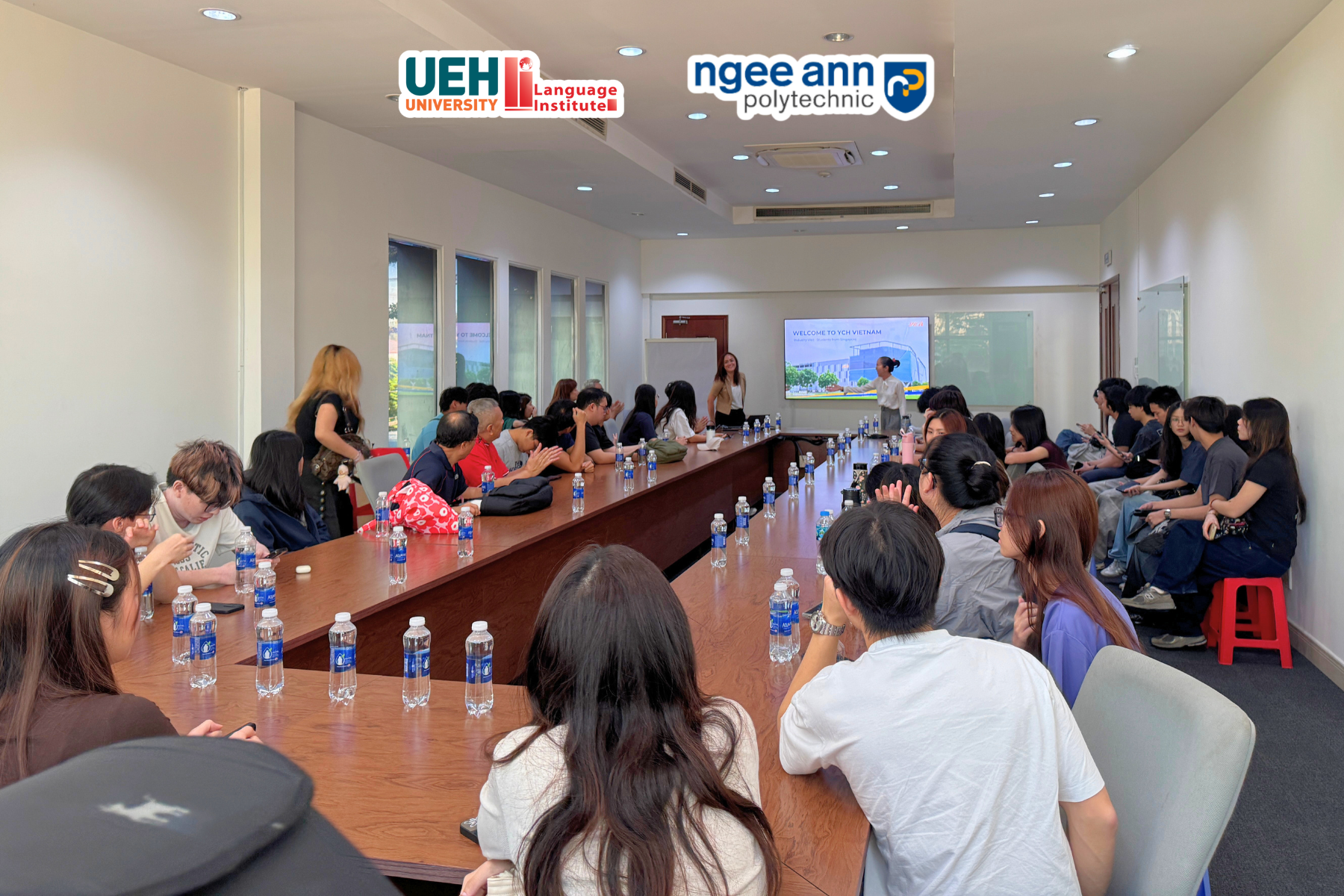
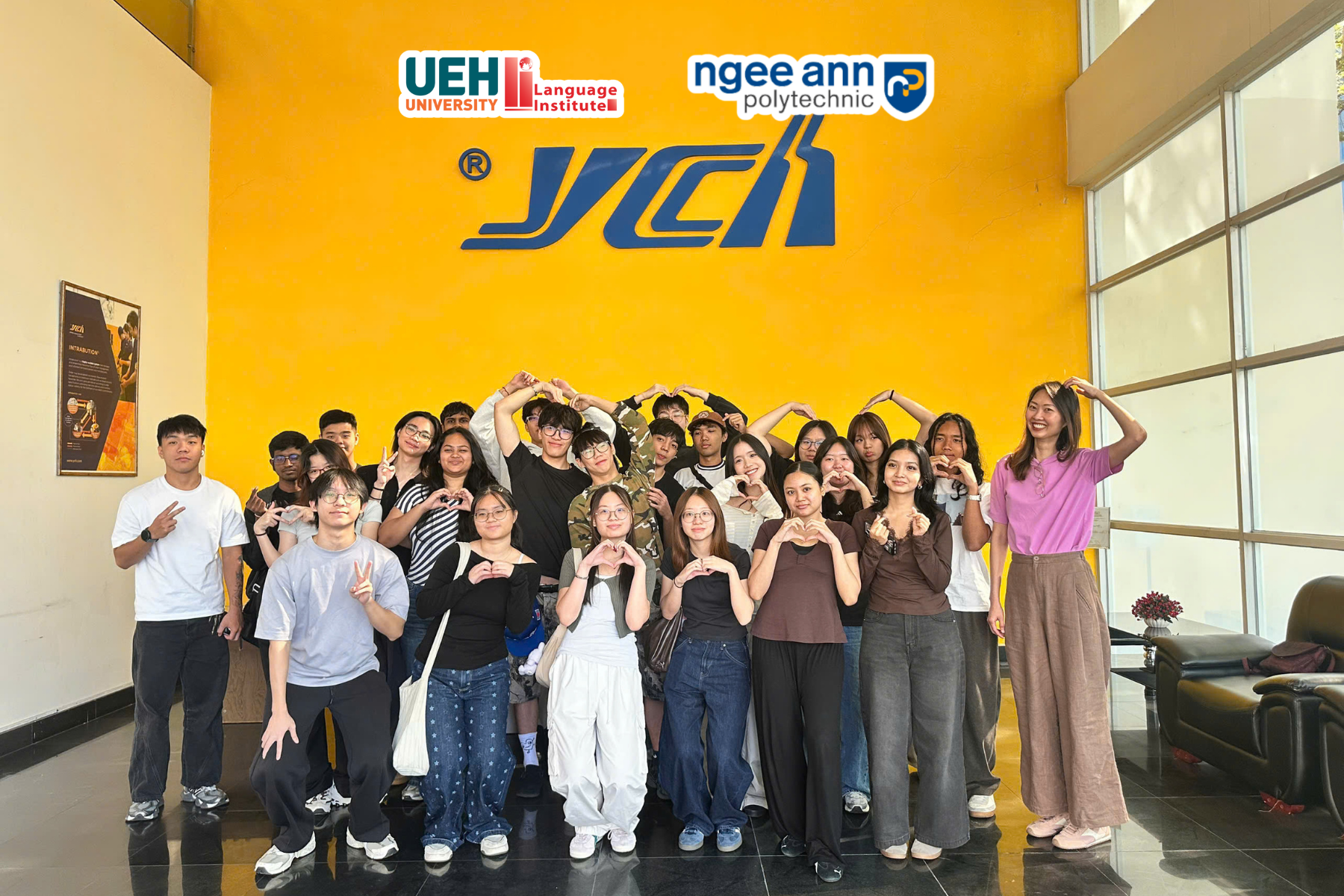
Students explore warehouse operations at YCH Protrade and port operations at Tan Cang Hiep Phuoc Port
Consolidating Learning, Sharing Perspectives, and Building Connections
Alongside the workshops and industry visits, reflection sessions and group presentations gave students time to review their learning. Participants brought together their observations, exchanged interpretations, and connected their experiences at each company with the economic, trade, and logistics topics discussed throughout the programme.
These exchanges also encouraged students to compare different operating models, raise further questions, and develop their presentation and analytical skills. In this way, the individual visits formed a connected learning journey, progressing from an understanding of the market environment to an examination of how companies manufacture, operate, and distribute goods.
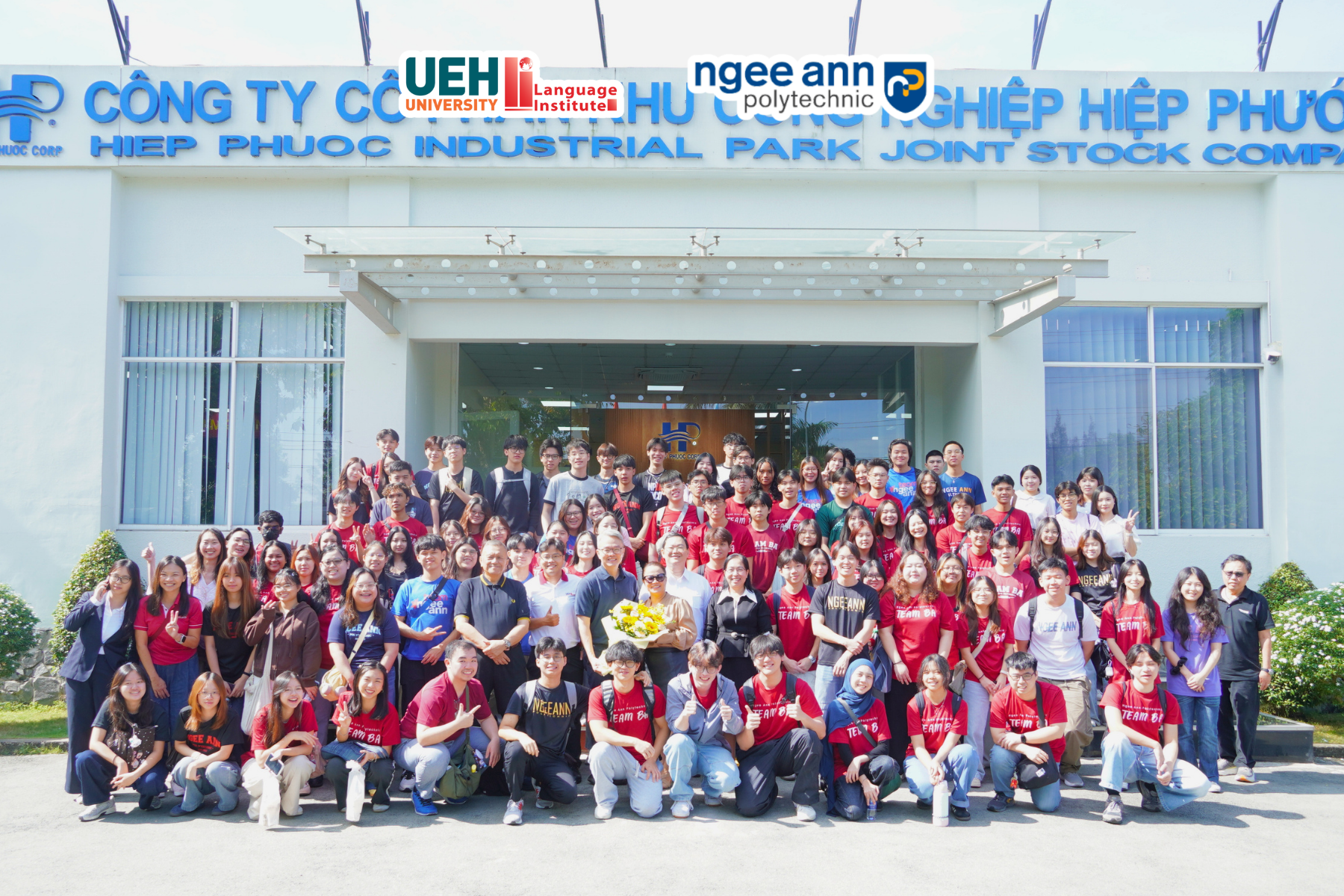
SOAR Programme 2026 concluded with academic and practical learning experiences in Vietnam while further strengthening connections between UEH and Ngee Ann Polytechnic. With the support of lecturers, speakers, and partner organisations, the programme broadened students’ international perspectives and provided a foundation for future collaboration and experiential learning opportunities.
Article and photos: UEH Language Institute